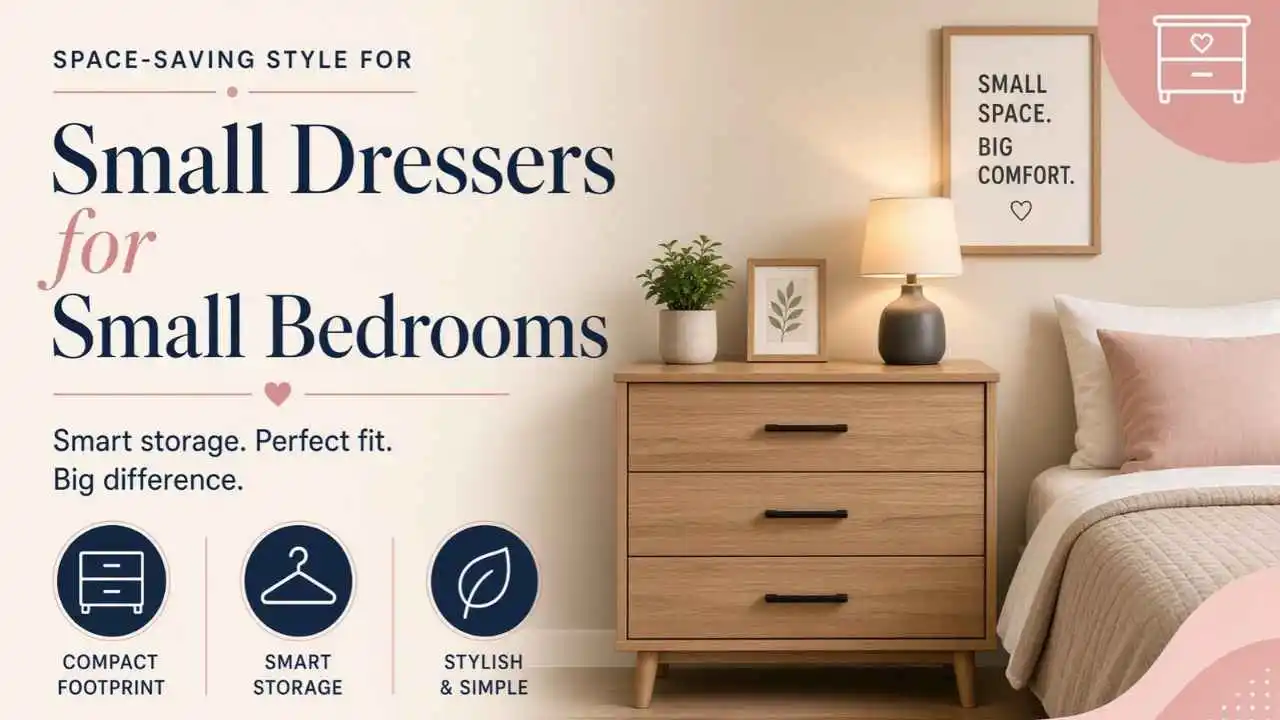
A dresser is often the second biggest piece in a bedroom, right after the bed. In a small room, the wrong one blocks walkways and makes the space feel cramped. The best small dressers for small bedrooms are narrow, tall, or low enough to fit where nothing else can.
Below are six picks with real sizes and prices, followed by a simple guide to choosing and placing a dresser safely.
Quick Picks
Our picks for the best small dressers for small bedrooms all come from IKEA’s current US lineup, because it offers many small sizes at low prices. Prices and sizes were checked in October 2026.
| Dresser | Drawers | Width x Height | Price | Best For |
|---|---|---|---|---|
| STORKLINTA | 3 | 27.5 x 29.5 inches | $129.99 | Nightstand and dresser in one |
| STORKLINTA | 6 | 27.5 x 47.3 inches | $229.99 | Most storage on a narrow wall |
| BRIMNES | 4 | 30.8 x 48.9 inches | $229.99 | Tall and slim spaces |
| FÅGELFJÄLLET | 3 | 32.3 x 30.8 inches | $179.99 | Low storage under a window |
| RAST | 6 | 48.9 x 26.8 inches | $129.99 | Low cost, easy to paint |
| HEMNES | 6 | 42.5 x 51.6 inches | $399.99 | Sturdier build for long term use |
The Picks in Detail
STORKLINTA 3 drawer: At 27.5 inches wide, this is one of the best small dressers for small bedrooms when you have no room for a nightstand. Put it beside the bed and use the top for a lamp and phone.
STORKLINTA 6 drawer: Same narrow width, but much taller. You get six drawers on a wall that is less than 2.5 feet wide.
BRIMNES 4 drawer: This tall, slim chest suits the gap between a door and a corner. Its height means you use wall space instead of floor space.
FÅGELFJÄLLET 3 drawer: A low dresser that fits under a window or a wall shelf. The top works as a small desk or vanity.
RAST 6 drawer: This ties for the lowest price in the group. It is made of solid pine and comes unfinished, so you can paint or stain it. It is wider, so it fits best in a room with a free long wall.
HEMNES 6 drawer: The most expensive pick, but it feels sturdier than budget lines. Choose it if you want one of the best small dressers for small bedrooms that will last through several moves.
How to Measure Before You Buy
Measure first, then shop. Even the best small dressers for small bedrooms fail if they block a door. Check these numbers:
- Wall width: Measure the full wall where the dresser will go.
- Walkway: Leave at least 30 inches in front of the dresser so you can open drawers and still walk past.
- Depth: Check the product page for depth. A deep dresser steals walkway space.
- Doors and windows: Make sure the dresser does not block a door swing, closet, outlet, or heater.
- Path into the room: Measure your front door, hall, and stairs. Flat pack pieces help here.
Tall vs Wide: Which Works Better?
For most of the best small dressers for small bedrooms, tall beats wide. A tall dresser holds about the same amount but uses half the floor. That leaves room for a chair, a desk, or just open space.
Wide, low dressers still have a place. They work well under a window, under a TV, or at the side of a large room. They also give you a long surface for decor or a mirror.
A simple rule: if floor space is tight, go tall. If wall space is tight, go low and wide.
How Many Drawers Do You Need?
Drawer count matters more than size. Think about what you will store.
- 3 drawers: enough for socks, underwear, and sleepwear if you hang most clothes.
- 4 to 5 drawers: fits most people who live alone.
- 6 or more drawers: good for couples or if your closet is very small.
Before you buy one of the best small dressers for small bedrooms, sort your clothes. Many people find they can donate a full drawer of items they never wear.
How to Spot a Sturdy Small Dresser
Price is not the only thing that matters. The best small dressers for small bedrooms also need to hold up to daily use. Check these details on the product page or in the store:
- Material: Solid wood lasts longest. Particleboard and fiberboard cost less, but they can sag and chip, and they do not handle many moves well.
- Drawer slides: Metal slides with ball bearings open smoothly and hold more weight than simple wood runners.
- Drawer stops: Stops keep drawers from falling out when you pull them open.
- Back panel: A thin back panel held by a few nails can loosen over time. A panel set into grooves is stronger.
- Drawer depth: Very shallow drawers fill up fast. Check the inside depth if you fold bulky sweaters.
- Weight: A heavier dresser is often sturdier, but it is also harder to move. Keep this in mind if you move every year.
Dresser Alternatives for Very Tiny Rooms
Sometimes there is no wall left for a dresser at all. In that case, the best small dressers for small bedrooms might not be dressers. Try these instead:
- Storage bed: A bed with built in drawers can hold as much as a 4 drawer chest.
- Closet drawer units: Small plastic or wood drawers fit on the closet floor under hanging clothes.
- Under bed bins: Rolling bins work well for clothes you are not wearing this season.
- A tall cube shelf with bins: Fabric bins in a cube shelf act like drawers and cost less.
- A nightstand with drawers: Two deep drawers next to the bed can hold socks, underwear, and sleepwear.
Safety: Anchor Every Dresser
This step matters most. Dressers can tip over when drawers are open, especially if a child climbs them. Since September 1, 2023, a federal rule requires new dressers and similar units 27 inches or taller to pass stability tests. These tests include open drawers, a 60 pound child weight, and placement on carpet. The rule also requires a tip restraint kit in the box. You can read the details on the CPSC clothing storage unit page.
Even the best small dressers for small bedrooms should be anchored to the wall. Tall, narrow dressers are the most likely to tip. If you rent, ask your landlord about anchoring. Most allow it, since a small screw hole is easy to patch. Used dressers made before 2023 may not meet the new rule, so anchor them too.
Small Bedroom Placement Tips
Where you put the dresser matters as much as which one you buy. The best small dressers for small bedrooms still need good placement. Try these ideas:
- Use a short dresser as a nightstand to save buying two pieces.
- Put a tall dresser in a corner beside the door.
- Avoid the foot of the bed in a small room. It usually narrows the walkway too much.
- Hang a mirror above a low dresser to make the room feel bigger.
- Put a dresser inside a large closet if your closet has floor space.
Our guide on how to make a small bedroom feel twice as big has more layout tips. You will also find other compact pieces in our list of space saving furniture for studio apartments.
New or Used?
Used dressers are often a great deal. Solid wood pieces sell cheaply because they are heavy to move. If you buy used, check that drawers slide well, the frame does not wobble, and the back panel is firm. Then anchor it to the wall. If you want something light and easy to move, the best small dressers for small bedrooms are often new flat pack pieces like the ones above.
To see how a dresser fits into your total setup cost, check our realistic first apartment budget, or compare stores in our IKEA vs Wayfair for small apartments guide.
Frequently Asked Questions (FAQs)
Here are quick answers to common questions about the best small dressers for small bedrooms.
What size dresser is best for a small bedroom?
Look for a dresser under 32 inches wide if your floor is tight, or under 30 inches tall if it needs to fit below a window. The best small dressers for small bedrooms also leave at least 30 inches in front for opening drawers.
Is a tall or wide dresser better for a small room?
Tall is usually better because it uses less floor. Wide, low dressers work best under windows. Many of the best small dressers for small bedrooms are tall and narrow for this reason.
Do I need to anchor a dresser in a rental?
Yes, especially if children live with you or visit. Ask your landlord first. Even the best small dressers for small bedrooms can tip over if they are not anchored, and most landlords allow a small screw hole.
Final Thoughts
The best small dressers for small bedrooms are the ones that fit your exact wall and leave you room to walk. Measure first. Choose tall if your floor is tight and low if your wall is tight. Pick the right number of drawers. And always anchor the dresser to the wall. Any of the six picks above can work well in a small room for a fair price.