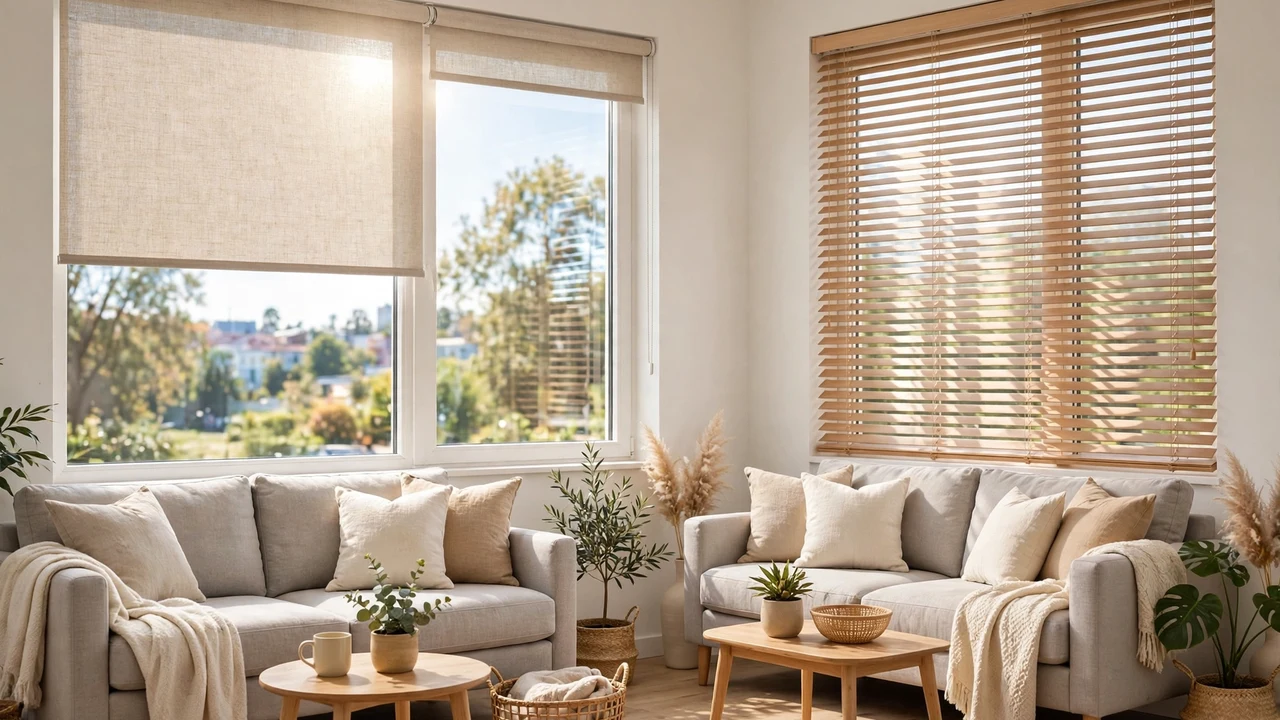
You’re shopping for window coverings and every site uses “roller blinds” and “roller shades” like they’re different products. In the U.S., roller blinds vs roller shades is mostly a naming difference: both are one flat sheet of fabric that rolls up on a tube. The real choice is roller shades vs slat blinds, and the comparison chart below makes that call in 30 seconds.
Roller Blinds vs Roller Shades: What’s Actually Different
Here’s the truth about roller blinds vs roller shades. In the UK and Australia, people call almost every window covering a “blind.” In the U.S., the industry splits them into two families:
- Blinds have hard slats (vinyl, aluminum, wood, faux wood) that tilt.
- Shades are soft fabric that raises and lowers, with no slats.
By that U.S. definition, a “roller blind” is technically a roller shade. Same tube, same fabric sheet, same mechanism.
Retailers just use whichever term their customers search for. Not a different product.
So What Should You Compare Instead?
That brings us to the comparison that matters: roller shades vs blinds with slats. That’s where price, light control, and cleaning change a lot.
| Feature | Roller shade (aka roller blind) | Slat blinds |
|---|---|---|
| Light control | Up or down only; fabric opacity sets the light | Tilt slats for angled light and privacy |
| Blackout ability | Excellent with blackout fabric (edge gaps aside) | Light leaks between slats |
| Look | Clean, minimal, nearly invisible when rolled up | More visual lines, more traditional |
| Cleaning | Vacuum or spot clean one surface | Dust every slat; tedious |
| Durability | Fabric can fray or crease at edges | Vinyl slats bend; faux wood is tough |
| Typical stock price (36″ window) | About $20–$60 | About $10–$50 (vinyl to faux wood) |
| Kitchens and baths | Choose vinyl or PVC-coated fabric | Faux wood or aluminum handle moisture well |
Key takeaway: pick roller shades for blackout and a clean look; pick slat blinds when you want to tilt for daylight but keep privacy.
Opacity: The Spec That Matters Most
Whether you call it roller blinds vs roller shades, the fabric opacity is the decision that changes how your room feels. Most brands sell four levels:
- Sheer: soft glow, little privacy at night.
- Light filtering: daytime privacy, rooms stay bright.
- Room darkening: dims a lot, good for TV rooms.
- Blackout: blocks nearly all light through the fabric itself.
Solar shades are a related style. They’re woven screen fabric rated by “openness,” and lower openness means less glare and more privacy. Here’s the catch: many solar shades let people see in at night when your lights are on.
The Light-Gap Problem Nobody Warns You About
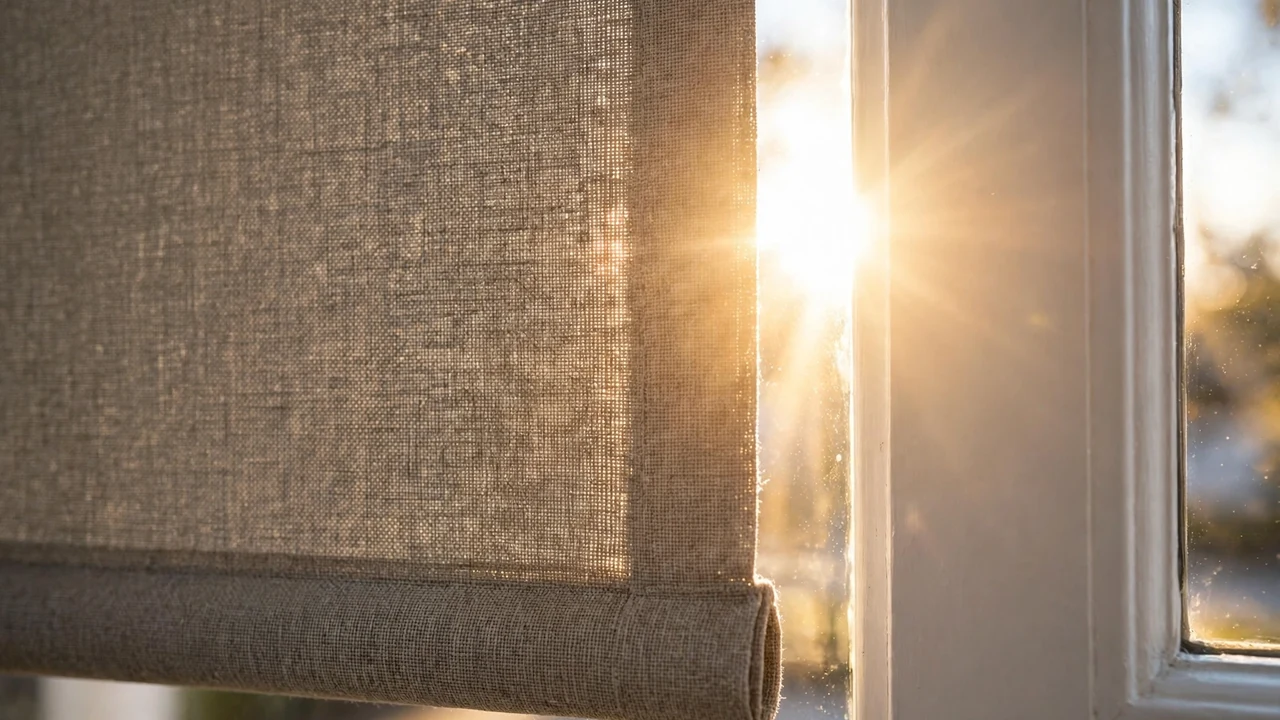
Picture this: you bought blackout roller shades, hung them inside the frame, and there’s still a bright line down both sides at 6 a.m. That’s normal. Inside-mounted roller shades leave a small gap on each side because the fabric has to clear the brackets.
- Fix 1: Outside mount, overlapping the frame by 2 to 3 inches per side.
- Fix 2: Add side light-blocking channels or strips.
- Fix 3: Layer curtains over the shade. See our drapes vs curtains guide.
Slat blinds have the same issue, plus light leaking through every slat. So for true darkness, roller shades win.
Cost, Cords, and Safety
Now, you might be wondering whether cheap means corded. Not anymore for stock products.
A U.S. voluntary safety standard (ANSI/WCMA A100.1-2018) took effect in December 2018, requiring stock window coverings to be cordless or have inaccessible cords. The CPSC strongly urges families with young children to go cordless.
| Lift style | Pros | Cons |
|---|---|---|
| Cordless spring | Safest, cleanest look | Hard to reach on tall windows; springs can weaken |
| Continuous loop | Precise control, good for wide shades | Needs a tension device mounted to the wall |
| Motorized | Great for hard-to-reach windows | Costs much more; batteries or wiring |
Which Is Better for Renters?
For renters, the roller blinds vs roller shades question ends quickly: buy roller shades in stock sizes, then pick inside or outside mount based on your frame. Stock roller shades are cheap enough to leave behind or take with you.
- Can’t drill? Look for tension-mount roller shades. Our no drill blinds guide covers options.
- Blinds already installed? Hang a roller shade outside the frame over them for extra darkness.
- Moving soon? Skip custom sizes. They rarely fit the next window.
On the flip side, if your landlord already provides vinyl slat blinds, you can leave those and simply add curtains. Cheapest fix of all.
Room-by-Room Picks
| Room | Best choice | Why |
|---|---|---|
| Bedroom | Blackout roller shade, outside mount | Darkest option |
| Living room | Light-filtering or solar shade | Daylight without glare |
| Kitchen | Faux wood blinds or vinyl roller shade | Wipes clean, handles steam |
| Bathroom | Vinyl roller shade or faux wood | Won’t warp |
| Home office | Slat blinds or solar shade | Tilt to kill screen glare |
FAQs
Are roller shades better than blinds?
For blackout and easy cleaning, yes. For adjustable daylight and privacy, slat blinds are better.
What is the difference between shades and blinds?
Blinds have tilting slats. Shades are soft fabric that rolls, folds, or stacks up.
What are the disadvantages of roller blinds?
Side light gaps, fabric edges that can fray, and no way to tilt for partial light.
Which is cheaper, blinds or shades?
Basic vinyl slat blinds are usually cheapest. Stock roller shades are close behind; custom shades cost more.
Bottom Line
Roller blinds vs roller shades is a naming question, not a product question. Decide between fabric shades and slat blinds instead, choose the right opacity, and outside-mount when you want real darkness. That’s the whole decision.
Furnishing on a budget? Our first apartment budget breakdown helps you plan it.