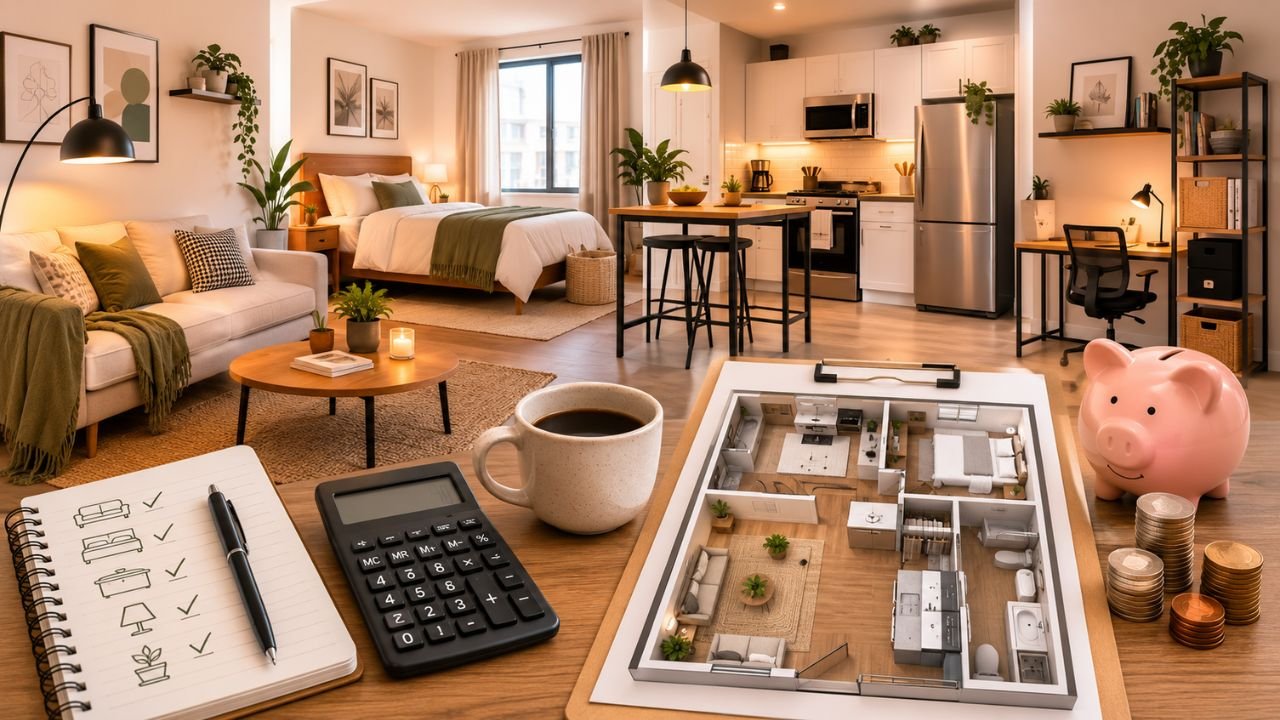
If you’ve spent any time researching what it costs to set up a first apartment, you’ve probably encountered the same useless answer over and over: “It depends.” Technically true, completely unhelpful.
Here’s what real numbers look like. Most people moving into their first apartment in the United States in 2026 will spend somewhere between $1,900 and $7,500 on the actual furnishing and setup — not counting rent and deposits. The gap between those numbers is huge, and it’s almost entirely about strategy: what you buy new, what you buy used, what you skip entirely, and what you wait to add later.
This guide breaks down the realistic first apartment budget across three tiers (bare bones, mid-range, comfortable), then walks room by room through specific cost ranges for each item you’ll actually need. You’ll also find a section on the move-in costs people consistently forget — security deposits, utility connections, renters insurance — that often add another $2,000 to $4,000 before you’ve even hung your first picture.
The numbers below are drawn from current retail pricing on major US retailers, Facebook Marketplace averages, and budget breakdowns published by personal finance writers and renter communities. They’re meant as planning targets, not promises — prices vary by city, season, and store. Treat them as a realistic compass, not a fixed map.
Three Budget Tiers: What Each One Buys You
Before the room-by-room breakdown, here’s the high-level view of what each first apartment budget tier looks like in practice.
Tier 1: Bare Bones — Roughly $1,900–$3,700
The “I need to live somewhere starting Saturday” budget. This tier assumes heavy use of Facebook Marketplace, thrift stores, hand-me-downs, and dollar-store basics. Most pieces are secondhand or off-brand. Functional, not stylish. You can absolutely live well on this budget — millions of first-time renters do it every year.
Tier 2: Mid-Range — Roughly $3,900–$7,500
The realistic middle path. About 60% new (mattress, sofa, kitchen basics), 40% secondhand or budget retailer (dressers, side tables, decor). This is the tier most first-time renters with a steady job land in, and it produces a genuinely comfortable apartment.
Tier 3: Comfortable — Roughly $7,500–$13,000
Mostly new pieces from mid-range retailers (IKEA, Target, Wayfair, Walmart), plus a few quality upgrades on the items you’ll use daily — a better mattress, a sturdier sofa, real cookware. Not luxury, but not survival mode either.
A useful rule of thumb: whatever number you have in your head right now, add about 20%. The cost to furnish a first apartment comes in higher than first-time renters expect, almost without exception.
Before the Furniture: The Move-In Costs People Forget
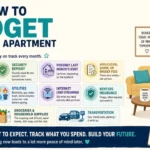
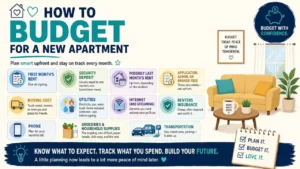
The single biggest budgeting mistake first-time renters make isn’t overspending on furniture. It’s underbudgeting the move itself. Here’s what you should plan for before you spend a dollar on a sofa.
Security Deposit
Almost always equivalent to one month’s rent. Some markets and properties require 1.5x or 2x. Plan for $1,000–$3,000 depending on rent.
First Month’s Rent
Due at lease signing. Usually charged separately from the security deposit. If your rent is $1,500 and your deposit is one month, you’re handing over $3,000 before the keys hit your hand.
Last Month’s Rent
Some landlords charge first plus last plus deposit upfront. Plan for an additional one month’s rent in those cases, especially in tight rental markets.
Application and Admin Fees
$25–$200 typically. Background checks, credit checks, and administrative processing.
Broker Fees
In some cities (notably New York, Boston, and parts of Chicago), you’ll pay a broker fee equivalent to one month’s rent or 10–15% of annual rent. In broker-fee markets, plan for $1,500–$4,000 extra. Outside those cities, this rarely applies.
Utility Deposits and Connection Fees
Electric, gas, water, internet, and renters insurance all carry small connection or activation fees, and some require deposits if you have no credit history. Plan for $100–$500 total for all utility startup costs.
Renters Insurance
Often required by lease. $120–$300 per year for typical coverage. Don’t skip it — replacement of stolen or fire-damaged belongings without it costs vastly more than the policy.
Moving Costs
DIY with a rented truck and friend labor: $100–$300. Professional movers for a one-bedroom: $400–$1,500 depending on distance.
Initial Stock-Up
Cleaning supplies, basic toiletries, first grocery run, light bulbs, a few cleaning rags. Easy to underestimate. Plan for $150–$300.
Total move-in costs, excluding rent itself: $1,500–$4,000 in most cases, before you’ve bought a single piece of furniture.
Room-by-Room Breakdown: The Realistic First Apartment Budget
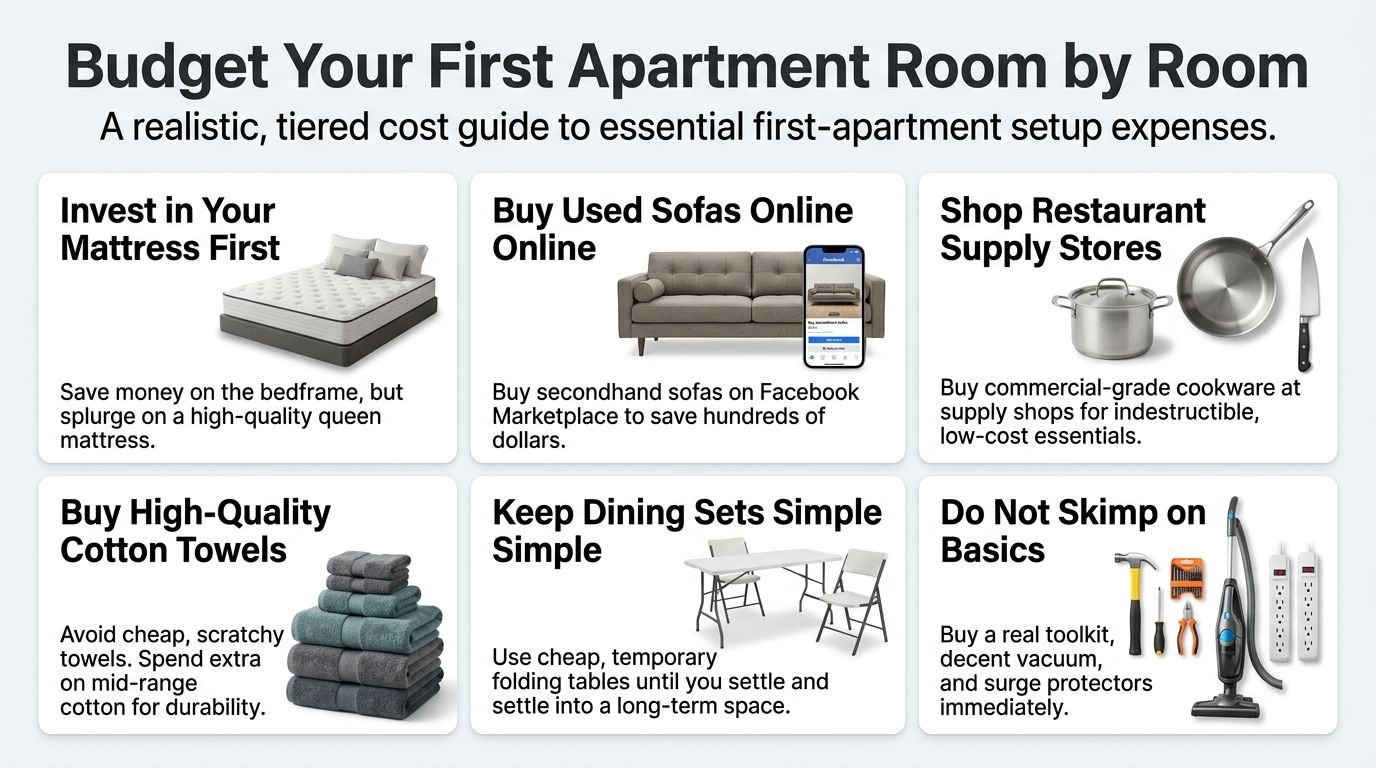
This is where most first apartment budget guides skip the detail you actually need. Below, every major item, with realistic price ranges across all three tiers.
Bedroom Setup
The bedroom is the room most people overspend on first and regret. A bed and basic storage are essential; everything else can wait.
| Item | Bare Bones | Mid-Range | Comfortable |
| Mattress (queen) | $200–$300 | $400–$700 | $700–$1,200 |
| Bed frame | $80–$150 | $150–$300 | $300–$500 |
| Pillows (2) | $20–$40 | $50–$100 | $80–$150 |
| Sheets (1 set) | $25–$50 | $60–$120 | $120–$200 |
| Comforter or duvet | $40–$80 | $80–$150 | $150–$300 |
| Dresser or 3-drawer storage | $80–$150 | $150–$300 | $300–$500 |
| Nightstand | $30–$60 | $60–$150 | $150–$300 |
| Bedside lamp | $20–$40 | $40–$80 | $80–$150 |
| Curtains + rod | $25–$50 | $50–$100 | $100–$200 |
| Hangers, hamper, basics | $25–$45 | $40–$70 | $70–$120 |
| Bedroom total | $545–$965 | $1,090–$2,070 | $2,150–$3,620 |
The biggest decision in this room is the mattress. A bad mattress at any price ruins your sleep for years; a decent one transforms your apartment from a place you survive into a place you actually rest. Most reviewers find the sweet spot at $400–$700 for a queen mattress — well-rated boxed mattresses from major online brands genuinely outperform much pricier showroom options. Save on the frame, splurge on the mattress.
Living Room Setup
The living room is where most of your first apartment budget will land, mostly because of the sofa. It’s also the room with the most flexibility — you can live happily for months without certain pieces while you find the right ones.
| Item | Bare Bones | Mid-Range | Comfortable |
| Sofa | $200–$400 | $500–$900 | $900–$1,500 |
| Coffee table | $40–$80 | $80–$200 | $200–$400 |
| TV stand or media console | $60–$120 | $120–$300 | $300–$500 |
| Side or end table | $30–$60 | $60–$120 | $120–$250 |
| Floor or table lamp | $30–$60 | $60–$120 | $120–$200 |
| Area rug (5×7) | $50–$120 | $120–$300 | $300–$500 |
| Curtains + rod | $25–$50 | $50–$100 | $100–$200 |
| Throw pillows + blanket | $30–$60 | $60–$120 | $120–$200 |
| Living room total | $465–$950 | $1,050–$2,160 | $2,160–$3,750 |
The sofa is the highest-stakes purchase of any first apartment. Buying new at the bare-bones tier almost guarantees a sofa that breaks down in two to three years. Buying secondhand on Facebook Marketplace from someone moving out of a similar apartment is consistently the best-value play in this category — quality used sofas under $400 are plentiful in any major city. If you must buy new, IKEA’s lower-end models hold up better than their reputation suggests for the price.
Kitchen Setup
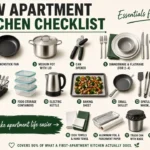
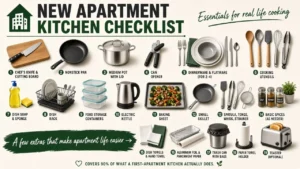
A working kitchen needs about 32 items to function well — but the budget reality is more compact than viral lists suggest. Here’s how the cost to furnish a first apartment kitchen breaks down by category.
| Category | Bare Bones | Mid-Range | Comfortable |
| Cookware (pans, pots, baking sheet) | $80–$150 | $150–$300 | $300–$500 |
| Knives + cutting board | $30–$50 | $50–$100 | $100–$200 |
| Cooking utensils (full set) | $25–$45 | $45–$80 | $80–$150 |
| Measuring tools + mixing bowls | $25–$40 | $40–$70 | $70–$120 |
| Tableware (plates, bowls, glasses, mugs) | $60–$100 | $100–$200 | $200–$400 |
| Flatware set | $20–$40 | $40–$80 | $80–$150 |
| Food storage containers | $25–$45 | $45–$80 | $80–$120 |
| Small appliances (kettle, toaster, blender) | $80–$150 | $150–$250 | $250–$400 |
| Towels, oven mitts, sponges | $25–$40 | $40–$70 | $70–$100 |
| Kitchen total | $370–$660 | $660–$1,230 | $1,230–$2,140 |
Restaurant supply stores and thrift shops are the best-kept secrets for kitchen setup. The same sheet pans, mixing bowls, and tongs that professional kitchens use cost 40–60% less than identical pieces from cookware retailers. Pyrex and stainless steel are essentially indestructible, so secondhand is a genuine path to a high-quality setup at the bare-bones tier.
Bathroom Setup
The cheapest room in the apartment to set up — and the easiest to overspend on if you let viral organization videos shape your budget.
| Item | Bare Bones | Mid-Range | Comfortable |
| Shower curtain + liner + rings | $15–$30 | $30–$60 | $60–$120 |
| Bath mat | $10–$20 | $20–$40 | $40–$80 |
| Bath towels (2 sets) | $30–$60 | $60–$120 | $120–$250 |
| Hand and washcloth towels | $15–$25 | $25–$50 | $50–$100 |
| Toilet brush, plunger, trash can | $25–$45 | $45–$70 | $70–$120 |
| Storage (over-toilet unit, organizers) | $30–$60 | $60–$120 | $120–$250 |
| Initial toiletries stock | $40–$80 | $80–$120 | $120–$200 |
| Bathroom total | $165–$320 | $320–$580 | $580–$1,120 |
Towels are the single item worth spending more on in this room. Cheap towels feel scratchy, shed lint for months, and don’t last; mid-range cotton towels are comfortable and last 5–10 years. Everything else (shower curtain, bath mat, organization) can come from discount retailers without compromise.
Dining Area Setup
Many first apartments don’t have a separate dining area — a small table by a window or a kitchen counter with stools handles the role. Adjust this category based on your specific layout.
| Item | Bare Bones | Mid-Range | Comfortable |
| Dining table (2-4 person) | $80–$150 | $150–$350 | $350–$600 |
| Dining chairs (2-4) | $40–$120 | $120–$300 | $300–$600 |
| Dining total | $120–$270 | $270–$650 | $650–$1,200 |
Folding tables and budget IKEA dining sets work fine for the first year or two. Save serious dining furniture for when you know your long-term space.
Cleaning, Tools, and Miscellaneous Essentials
The category most first apartment budgets forget about entirely, and the one most likely to derail your first month with surprise spending.
| Item | Bare Bones | Mid-Range | Comfortable |
| Vacuum cleaner | $50–$100 | $100–$200 | $200–$400 |
| Broom, dustpan, mop, bucket | $30–$60 | $60–$100 | $100–$150 |
| Cleaning supplies starter | $40–$70 | $70–$120 | $120–$180 |
| Trash cans (kitchen + bathroom) | $30–$60 | $60–$100 | $100–$180 |
| Iron + small ironing board | $35–$60 | $60–$100 | $100–$150 |
| First aid kit and basic medicines | $20–$40 | $40–$80 | $80–$120 |
| Basic toolkit (hammer, screwdrivers, measuring tape) | $25–$50 | $50–$100 | $100–$180 |
| Light bulbs, batteries, surge protectors | $30–$50 | $50–$80 | $80–$120 |
| Misc total | $260–$490 | $490–$880 | $880–$1,480 |
A surge protector for your TV and computer setup, a real toolkit (not the pink hammer kit at the checkout aisle), and a decent vacuum are the three items in this category most worth not skimping on.
The Full First Apartment Budget at a Glance
| Category | Bare Bones | Mid-Range | Comfortable |
| Bedroom | $545–$965 | $1,090–$2,070 | $2,150–$3,620 |
| Living Room | $465–$950 | $1,050–$2,160 | $2,160–$3,750 |
| Kitchen | $370–$660 | $660–$1,230 | $1,230–$2,140 |
| Bathroom | $165–$320 | $320–$580 | $580–$1,120 |
| Dining | $120–$270 | $270–$650 | $650–$1,200 |
| Cleaning + Misc | $260–$490 | $490–$880 | $880–$1,480 |
| Setup subtotal | $1,925–$3,655 | $3,880–$7,570 | $7,650–$13,310 |
| Move-in costs (one-time) | $1,500–$4,000 | $1,500–$4,000 | $1,500–$4,000 |
| Grand total | $3,425–$7,655 | $5,380–$11,570 | $9,150–$17,310 |
The wide ranges within each tier reflect real variation — a bare-bones renter who scores great Facebook Marketplace deals and one who pays slightly more for convenience genuinely land hundreds of dollars apart. Most renters end up in the middle third of their chosen tier.
Where to Save vs. Where to Splurge
After researching dozens of first-apartment budget breakdowns and renter communities, a clear consensus emerges on where to spend versus where to skim.
Splurge (Relatively)
- Mattress. You spend a third of your life on it. A bad mattress wrecks your back, your sleep, and your mood. The single highest-impact dollar in any first apartment.
- Sofa. You’ll sit on it every day for years. Cheap sofas break down in 18–24 months; mid-range ones last 5–8 years.
- Kitchen knives. A good $40 chef’s knife is faster, safer, and more enjoyable than a $20 set of dull ones.
- Lighting. Three good lamps transform a room more than $500 of decor.
- Towels. Cheap towels lint and feel terrible; decent ones last a decade.
Save (Without Sacrificing Much)
- Dressers and side tables. Look near-identical at all price points. Buy secondhand or from a budget retailer.
- Curtains. $25 curtains look the same as $80 curtains from across a room.
- Decorative items. Vases, frames, candles, artwork — endless under-$25 options on Amazon and at thrift stores.
- Kitchen tableware. Plain white plates from IKEA or Target are indistinguishable from $200 sets.
- Small appliances. Mid-range kettles, toasters, and blenders perform identically to premium versions for the first few years.
Don’t Buy Yet
- Office furniture, if you can use your dining table for now.
- A second TV.
- Decor items for empty walls. Live in the space for a month before committing.
- Specialty kitchen appliances. Air fryer, Instant Pot, stand mixer — wait until you know if you’ll actually use them.
- Closet organization systems. What works depends on what fits in the closet.
Smart Strategies to Cut Costs by 30–50%
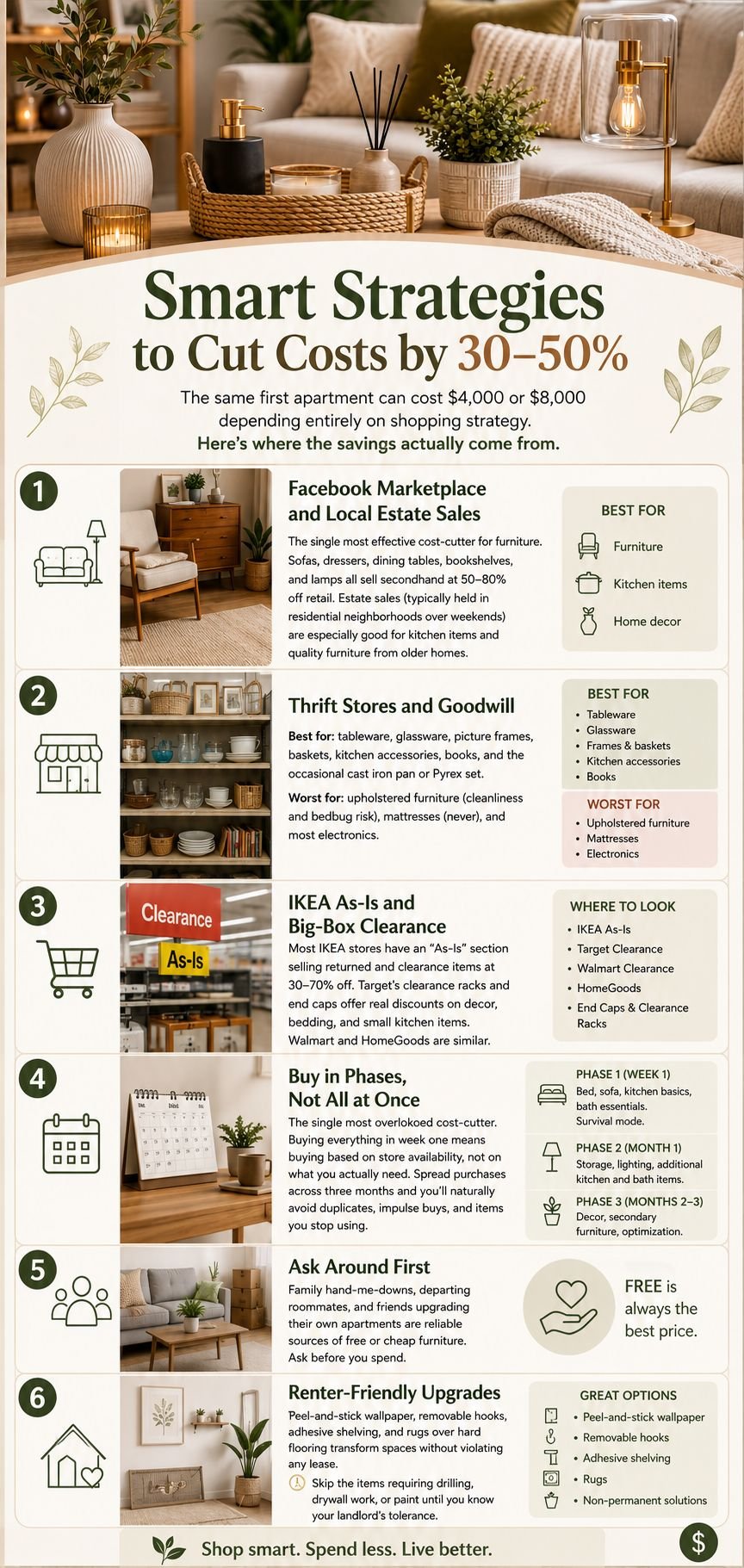
The same first apartment can cost $4,000 or $8,000 depending entirely on shopping strategy. Here’s where the savings actually come from.
Facebook Marketplace and Local Estate Sales
The single most effective cost-cutter for furniture. Sofas, dressers, dining tables, bookshelves, and lamps all sell secondhand at 50–80% off retail. Estate sales (typically held in residential neighborhoods over weekends) are especially good for kitchen items and quality furniture from older homes.
Thrift Stores and Goodwill
Best for: tableware, glassware, picture frames, baskets, kitchen accessories, books, and the occasional cast iron pan or Pyrex set. Worst for: upholstered furniture (cleanliness and bedbug risk), mattresses (never), and most electronics.
IKEA As-Is and Big-Box Clearance
Most IKEA stores have an “As-Is” section selling returned and clearance items at 30–70% off. Target’s clearance racks and end caps offer real discounts on decor, bedding, and small kitchen items. Walmart and HomeGoods are similar.
Buy in Phases, Not All at Once
The single most overlooked cost-cutter. Buying everything in week one means buying based on store availability, not on what you actually need. Spread purchases across three months and you’ll naturally avoid duplicates, impulse buys, and items you stop using.
- Phase 1 (Week 1): Bed, sofa, kitchen basics, bath essentials. Survival mode.
- Phase 2 (Month 1): Storage, lighting, additional kitchen and bath items.
- Phase 3 (Months 2–3): Decor, secondary furniture, optimization.
Ask Around First
Family hand-me-downs, departing roommates, and friends upgrading their own apartments are reliable sources of free or cheap furniture. Ask before you spend.
Renter-Friendly Upgrades
Peel-and-stick wallpaper, removable hooks, adhesive shelving, and rugs over hard flooring transform spaces without violating any lease. Skip the items requiring drilling, drywall work, or paint until you know your landlord’s tolerance.
Common First Apartment Budget Mistakes
The patterns that consistently appear in renter regret threads online.
Buying Everything at Once
First apartments are emotionally exciting, and the temptation is to walk out of one IKEA trip fully furnished. The result: $2,000 of furniture you didn’t need, in styles you stop liking three months later. Live in the space empty for at least a week before major purchases.
Falling for “Complete Apartment Packages”
Bundle deals from Wayfair, Amazon, or rent-to-own stores promising “everything you need for $999” are almost always padded with low-quality pieces designed to inflate the count. The math rarely works out — you’d spend less buying the same items individually from clearance sales.
Underbudgeting Soft Costs
Security deposits, utility connections, renters insurance, and moving costs routinely run $2,000–$4,000 in addition to the actual furniture budget. First-time renters consistently miss this and end up financing furniture purchases on credit cards at 20%+ interest.
Buying for the Apartment You Wish You Had
A $1,200 sectional doesn’t fit in a 600-square-foot studio, and a six-person dining table won’t help in a one-bedroom with no dining area. Measure your actual space before you shop, and accept its real constraints.
Overbuying Decor Before Living There a Month
The decor you imagine on move-in day rarely matches what actually feels right after you’ve lived in a space. Walls, surfaces, and accents reveal themselves as you use the apartment.
Frequently Asked Questions (FAQs)
How much should I save before getting my first apartment?
A realistic minimum is three months of rent plus $2,500 for setup costs. For a $1,500/month rent, that’s about $7,000 total saved before move-in. If your job is stable and your rent is lower, you can manage on less, but most first-time renters wish they’d saved more. The pattern of “moved in, spent everything, scrambled for two months” is overwhelmingly common in renter forums.
Can I really furnish a first apartment for under $2,000?
Yes, but only with heavy reliance on Facebook Marketplace, thrift stores, and hand-me-downs. Buying everything new from any retailer — even budget ones — will push you past $2,000 fast. The “bare bones” tier in this guide assumes about 60% secondhand purchases.
How much does it cost to set up an apartment from scratch with everything new?
Buying every item new at mid-range quality lands most renters in the $5,000–$8,000 range for the furnishings alone, before move-in costs. Going all-new at higher quality pushes that into the $10,000+ range.
What’s the cheapest room to set up?
The bathroom, by a significant margin. A complete bathroom setup runs $165–$320 in the bare-bones tier and rarely tops $1,200 even in the comfortable tier.
What’s the most expensive single item I’ll buy?
For most first apartments, it’s the sofa, followed closely by the mattress. The two together often account for 25–35% of the entire furnishing budget.
Should I get renters insurance?
Yes. Almost universally, renters insurance pays for itself the first time you need it. A typical policy costs $120–$300 per year and covers theft, fire, water damage, and personal liability. Most leases now require it anyway.
What if I’m moving in with a roommate?
Splitting costs with a roommate cuts most categories roughly in half — kitchen, living room, dining, and bathroom items are shared. Bedroom items remain individual. Most roommate-shared first apartment budgets land at about 60–65% of the solo numbers above, per person.
Is it worth using “buy now, pay later” services for furniture?
Generally, no. Services like Affirm, Klarna, and store financing carry real interest costs if you miss a payment, and the temptation to over-furnish on financing is significant. If you can’t afford it without payments, you can’t afford it — buy a cheaper version or wait. The exception is genuinely 0% APR offers from major retailers, used cautiously and paid off within the promotional window.
Final Thoughts
A realistic first apartment budget is not the $5,000 most people imagine, and it’s not the $1,000 a few aggressive minimalist videos suggest. It’s a range — $3,500 to $13,000 or more, depending on tier, strategy, and how willing you are to buy secondhand — that includes both the furniture itself and the easily-forgotten move-in costs that catch most first-time renters off guard.
The single best piece of advice from every experienced renter and personal finance writer who’s written about this: spread your purchases across three months, not three weeks. The apartment you’ve lived in for a month tells you what it actually needs. The apartment you’ve lived in for a day tells you what you imagined it would need — and those two lists are rarely the same.
Build the kit. Live in the space. Let the gaps reveal themselves. That’s the difference between an apartment that fits your life and one full of items you bought because the day felt urgent.
About The Author