You love your pet, but not the scratched door, couch hair, or fees chipping away at your deposit. How to create a pet-friendly home comes down to three things: wipeable surfaces, a safe zone for your pet, and removing the hazards they’ll find first. Below is a room-by-room checklist, a cost chart, and the renter rules most guides skip.
What a Pet-Friendly Home Actually Needs
Most guides on how to create a pet-friendly home are written by home builders. They talk about built-in dog showers and cat walkways.
Cool. Not helpful in a rented one-bedroom.
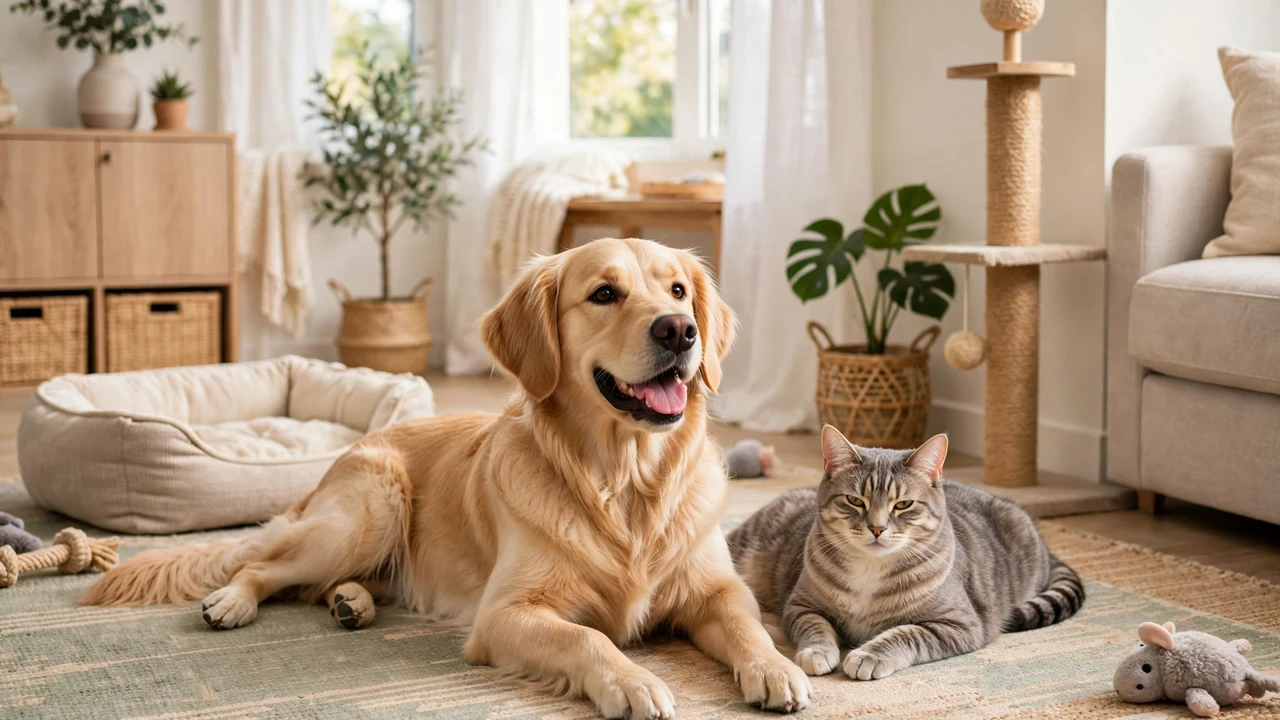
Here’s the catch: pets don’t need a custom house. They need predictability, a spot that’s theirs, and fewer things to chew, knock over, or swallow. Get those right and most damage never happens.
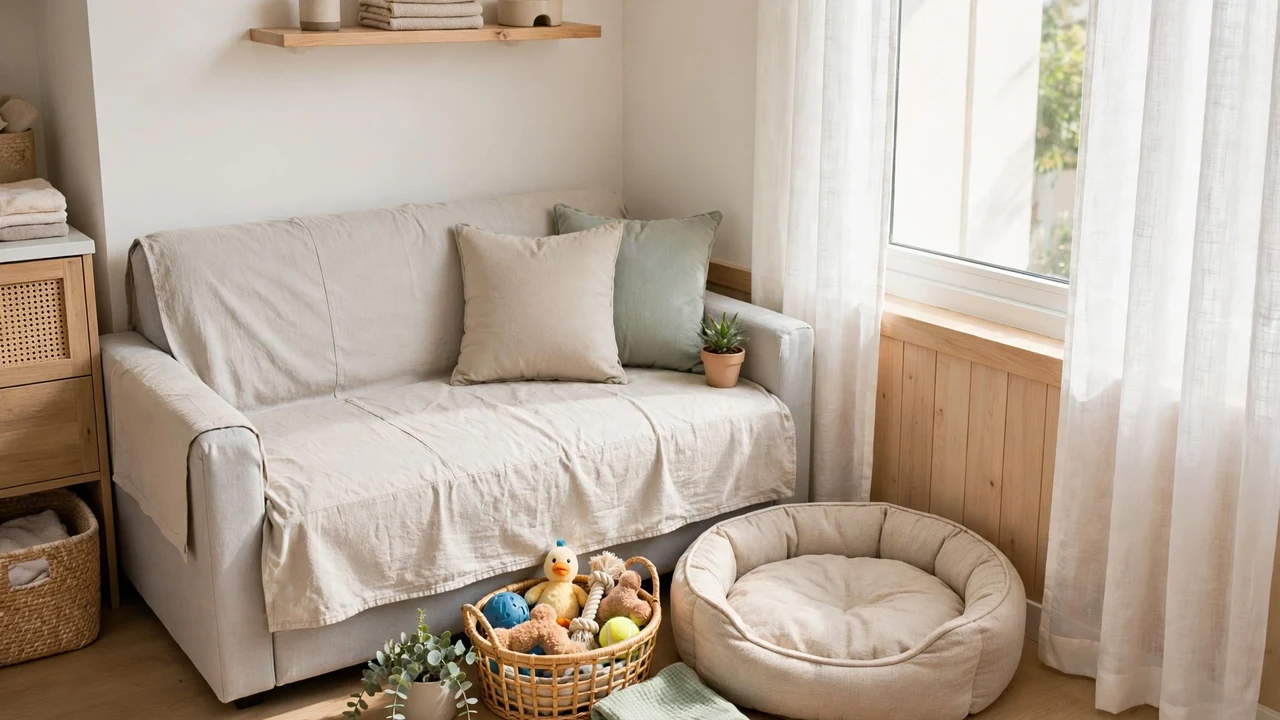
- A home base: bed, water, and toys in one quiet corner.
- Durable surfaces: washable, scratch-resistant, easy to wipe.
- Hazard control: cords, plants, trash, and meds out of reach.
- Routine: the same feeding, walking, and litter schedule every day.
The Renter Side: Pet Rent, Fees, and Rules
Before you buy a single pet gate, check your lease. If you’re figuring out how to create a pet-friendly home in a rental, the money side comes first.
| Charge | Average (2025) | Refundable? |
|---|---|---|
| Pet rent | About $36/month | No |
| Pet deposit | About $300 | Yes, minus damage |
| One-time pet fee | About $315 | No |
Those figures come from RentCafe’s 2025 pet-friendly rental data, which also found about 80% of listed rentals allow pets. That’s 12 months of pet rent alone running roughly $430 a year.
On the flip side, assistance animals are different. Under federal fair housing rules, a person with a disability can request an assistance animal as a reasonable accommodation, and HUD guidance says housing providers generally can’t charge pet fees or pet deposits for them. You can still be charged for actual damage.
How to Create a Pet-Friendly Home, Room by Room
Work one room at a time. Start where your pet spends the most hours, usually the living room.
Living Room
This is where scratches and hair pile up first. Your goal in the living room is fabric and floors that shrug off claws.
- Cover the couch with a washable throw or fitted cover. Tightly woven microfiber and performance fabrics resist claws better than loose weaves like boucle or linen.
- Use a washable rug. Ruggable is the best-known brand. Its pros are real, but owners report two flaws: the thin rug can bunch if the pad shifts, and replacement pads add cost. Who Should Skip This: anyone with a heavy chewer. Thin rugs don’t survive puppies.
- Tuck cords into a cord cover or behind furniture. Chewing on live cords can cause burns and shocks.
- Put a scratching post right next to the couch arm your cat likes. Location matters more than price.
Kitchen
Kitchens are where most pet emergencies start. Picture this: you’re cooking, a grape rolls off the counter, and your dog gets it before you do.
- Use a trash can with a locking or step lid.
- Store chocolate, grapes, onions, and xylitol gum in upper cabinets.
- Add a $5 child-safety latch to the cabinet under the sink.
- Feed on a silicone mat to protect floors from water splashes.
Bedroom
A pet-friendly bedroom is mostly about hair control. Wash bedding weekly, keep a lint roller by the door, and give your pet its own bed so yours stays cleaner.
Bathroom
Keep the toilet lid down and meds in a closed cabinet. If a litter box lives here, add a mat that catches scattered litter.
Pet-Safe Plants vs Plants to Remove
That brings us to the biggest mistake people make: decorating with plants first and checking toxicity later. Always check the ASPCA toxic and non-toxic plant database before buying.
| Often listed as non-toxic | Often listed as toxic |
|---|---|
| Spider plant | Lilies (especially dangerous for cats) |
| Boston fern | Sago palm |
| Parlor palm | Pothos |
| Calathea | Snake plant |
| African violet | Aloe vera |
Key takeaway: if you’re not sure, keep it off the floor and out of jump range, or skip it.
Protect Your Deposit With Cheap, Removable Fixes
The truth is, most pet damage in rentals is predictable: door scratches, carpet stains, and chewed blinds. Here’s what fixes each one without tools.
| Problem | Fix | Rough cost |
|---|---|---|
| Door scratches | Clear adhesive door protector | $10–$20 |
| Carpet accidents | Enzyme cleaner + washable rug | $15–$150 |
| Chewed blinds | Raise blinds; use tension or no-drill shades | $20–$60 |
| Furniture scratches | Scratch tape + scratching post | $15–$50 |
| Escape risk | Pressure-mounted pet gate | $30–$70 |
Need window ideas that survive curious paws? Our no drill blinds guide covers renter-safe options. Enzyme cleaners matter because regular soap leaves odor that pets can still smell, so they go back to the same spot.
Settling a New Pet In: The 3-3-3 Rule
Now, you might be wondering how long it takes for a new pet to feel at home. Rescue groups often use the 3-3-3 rule for dogs:
- First 3 days: overwhelmed. Expect hiding, low appetite, or nervous accidents.
- First 3 weeks: learning your routine. True personality starts showing.
- First 3 months: settled and bonded, feeling at home.
Part of how to create a pet-friendly home is simply keeping things calm and predictable during that window.
Small Apartment, Big Dog? Space Tips That Work
A pet-friendly home doesn’t need square footage. A crate with a cover, a floor bed, and two walks a day matter more than a big living room. Use vertical cat shelves or a tall cat tree so cats claim height instead of your counters.
For more ways to stretch a small floor plan, read how to organize small spaces and our space-saving furniture for studios.
FAQs About Making a Home Pet-Friendly
How do I make my house dog friendly?
Give your dog a quiet home base, lock up trash and food, hide cords, use washable rugs, and keep a steady routine.
What is the 3-3-3 rule for pets?
It describes how rescue dogs adjust: 3 days to decompress, 3 weeks to learn routines, and 3 months to feel at home.
How do I make a home for my pet?
Set up one spot with a bed, water, and toys away from foot traffic. Then remove hazards from floor level.
Can a landlord charge pet rent for an emotional support animal?
HUD guidance says housing providers generally can’t charge pet fees or deposits for assistance animals, though you’re still responsible for damage.
Bottom Line
How to create a pet-friendly home isn’t about expensive upgrades. Read your lease, remove floor-level hazards, cover the couch, and give your pet a spot that’s theirs. Spend your first $50 on enzyme cleaner, a door protector, and a trash can lid, then build from there.