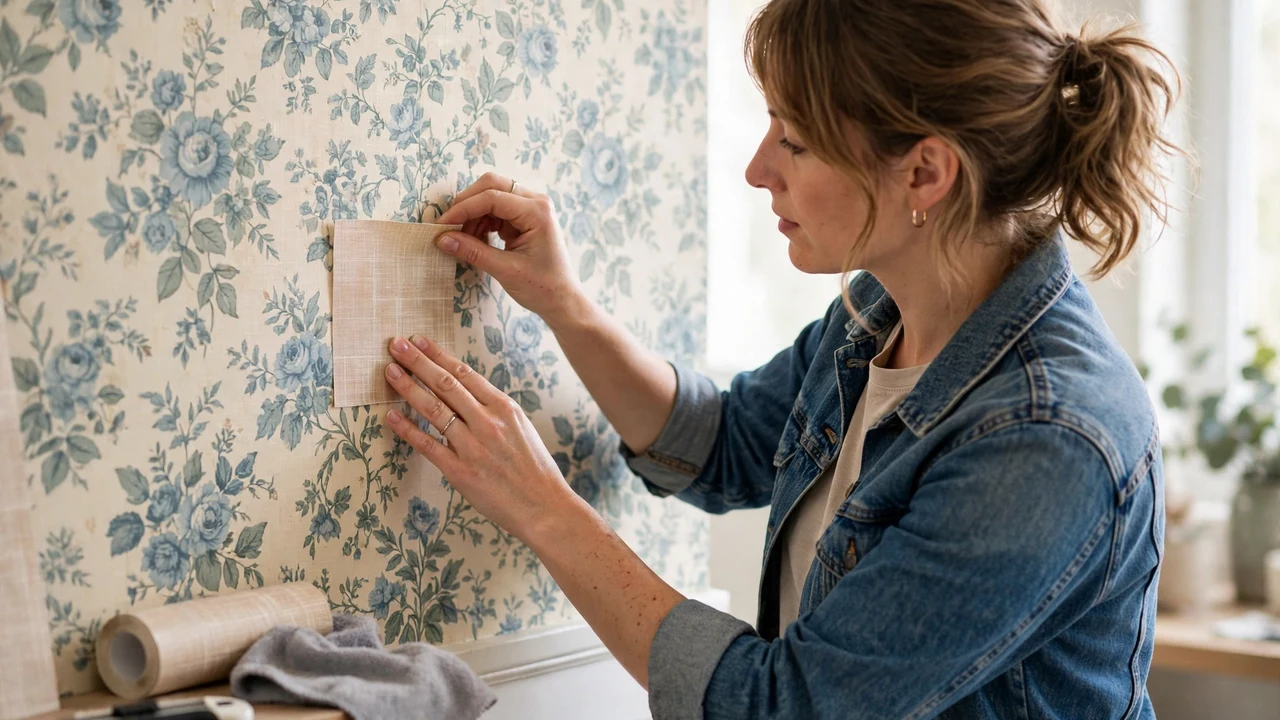
You moved into a place with dated wallpaper, and stripping it sounds like a weekend of steam, scraping, and regret. Yes, you can put peel and stick wallpaper on wallpaper, but only if the old paper is smooth, firmly glued, and a single layer. Below is a 5-point wall test, a prep checklist, and the removal risk most guides forget to mention.
The Short Answer on Peel and Stick Wallpaper on Wallpaper
Peel and stick wallpaper on wallpaper works because the new adhesive only needs a clean, smooth surface to grip. The problem isn’t sticking. It’s what’s underneath.
Here’s the catch: your new paper is only as solid as the old paper’s glue. If that old layer lifts, bubbles, or peels, it takes your new wall with it. So the real question is whether the existing wallpaper is a good base.
The 5-Point Test Before You Hang Anything
Run every wall through this before you buy rolls. It takes 15 minutes and saves you from a peeling mess in month two.
| Check | Pass | Fail (strip or skip) |
|---|---|---|
| 1. Texture | Flat and smooth to the touch | Embossed, grasscloth, flocked, or raised patterns |
| 2. Adhesion | No loose seams or bubbles | Edges lifting, corners curling |
| 3. Layers | One layer only | Two or more layers stacked |
| 4. Color | Light or neutral | Dark or bold pattern that may show through |
| 5. Moisture | Dry room, no stains | Mold, water stains, or steamy bathroom |
Key takeaway: if your wall fails texture or adhesion, don’t put peel and stick wallpaper on wallpaper. Fix or strip first.
How to Check Adhesion in 2 Minutes
Run your palm slowly across every seam. Listen for a crinkly, hollow sound, which means the paper has let go from the wall. Press any soft spots; if they give, that section needs seam adhesive before anything goes on top.
Do a 48-Hour Patch Test
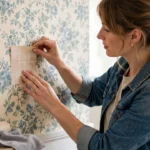
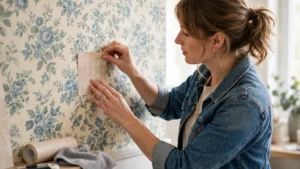
Stick a 12-inch sample in a hidden spot, like behind a dresser. Leave it for 48 hours. Then peel it back slowly and see two things: did it stay flat, and did it pull the old paper up when you removed it?
How to Prep Old Wallpaper for Peel and Stick
Getting peel and stick wallpaper on wallpaper to last is about 70% prep and 30% hanging. Don’t skip these.
- Turn off power and remove outlet covers and switch plates.
- Glue down loose seams with wallpaper seam adhesive. Roll flat with a seam roller and let it dry overnight.
- Fill holes and sand any filler perfectly flat. Bumps telegraph through thin peel-and-stick vinyl.
- Clean the surface with a mild soap solution, then let it dry fully. Dust and kitchen grease kill adhesion.
- Snap a level line for your first strip. Old walls are rarely plumb.
Picture this: you skip step two, hang three gorgeous strips, and a week later a seam underneath pops. Now there’s a ridge running down your new wall. Big mistake.
Hanging Tips That Prevent Bubbles and Gaps
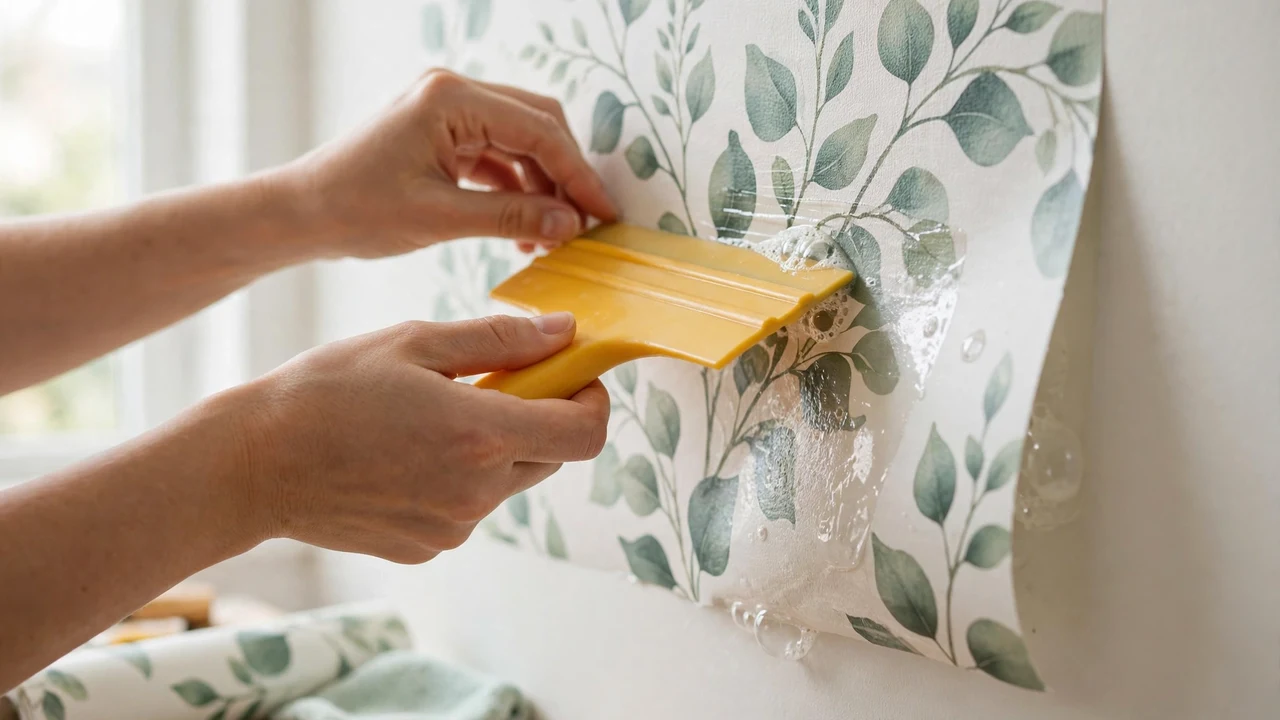
Once your base passes, the install is the same as on paint. Home Depot’s guide recommends peeling back about 12 inches of backing at a time and adding 2 to 3 extra inches per strip for trimming.
- Work top to bottom, smoothing from the center out with a plastic smoother.
- Offset your seams from the old wallpaper’s seams by at least a few inches. Stacked seams lift together.
- Trim with a fresh razor blade every few cuts. Dull blades tear vinyl.
- Overlap slightly only if the product instructions allow it. Some brands butt seams edge to edge.
The best part? Most peel-and-stick vinyl can be lifted and repositioned a few times while you work.
The Removal Risk Nobody Mentions
That brings us to the biggest mistake renters make. When you eventually remove peel and stick wallpaper on wallpaper, the adhesive can grip the old paper harder than the old paper grips the wall. Pull it off, and you may strip both layers in patches.
- Peel slowly at a sharp, low angle, close to the wall.
- Warm stubborn spots with a hair dryer for 20 to 30 seconds.
- Test removal on your patch first so there are no surprises at move-out.
- Get landlord approval in writing if the old wallpaper is part of the rental.
The truth is, “removable” means removable from properly prepped paint. Over old wallpaper, it’s a gamble. For a full renter breakdown, see our renter friendly wallpaper guide.
When to Strip Instead
Sometimes peel and stick wallpaper on wallpaper is simply the wrong move. Strip or skip when:
- The old paper is textured, flocked, or real grasscloth.
- There are two or more layers already.
- You see mold, water stains, or bubbling from moisture.
- The wall is in a bathroom with a weak exhaust fan.
On the flip side, if stripping isn’t allowed, a large framed print, fabric panel, or freestanding screen can hide an ugly wall with zero adhesive.
Peel and Stick vs Traditional Wallpaper Over Wallpaper
| Factor | Peel and stick | Traditional paste |
|---|---|---|
| Over vinyl or coated paper | Usually sticks (smooth surface) | Poor, paste can’t soak in |
| Mess | None | Paste, water, sponges |
| Removal | Can lift old paper | Usually means stripping both |
| Cost per roll | Often $25–$60 | Varies widely |
| Best for | Renters, accent walls | Owners, long-term rooms |
Bottom line: for renters, peel and stick is the safer bet on a smooth, tight wall.
FAQs
Can you put peel and stick on top of wallpaper?
Yes, if the old wallpaper is smooth, single-layer, and firmly attached with no loose seams.
Should I use peel and stick wallpaper or regular wallpaper?
Renters and first-timers should use peel and stick. Owners planning a permanent look may prefer traditional paste.
Can we stick wallpaper on wallpaper?
You can, but textured, peeling, or multi-layer walls should be stripped first.
Can peel and stick wallpaper last?
On a clean, smooth, dry wall it can last years. Humidity, dust, and poor prep shorten that fast.
Final Take
Peel and stick wallpaper on wallpaper is a smart shortcut when the old layer is smooth, tight, and single. Run the 5-point test, glue every loose seam, and patch-test for 48 hours. Do that, and you’ll get a new look without a weekend of scraping.
Want more cheap wall fixes? Check out our cheap home upgrades.