The scary part of your first apartment isn’t the monthly rent. It’s the pile of costs that hit before you’ve slept there a single night: the deposit, the first month, the setup fees, and a whole apartment’s worth of stuff you don’t own yet. Budget for those up front and the monthly part takes care of itself.
Here’s how to build an apartment budget from scratch, in the right order: what to save before you sign, how much rent you can actually afford, and how to keep the monthly numbers from eating you alive.
The Three Numbers that Matter
Before anything else, know these three figures. Everything else is detail.
One: your move-in cash, the lump sum due before you get keys.
Two: your affordable monthly rent, capped at a percentage of your income.
Three: your true monthly cost, which is rent plus everything that comes with it. Nail these three and you have a working budget. Our realistic first apartment budget walks through sample numbers; this guide is the framework behind them.
Step 1: Save Your Move-in Cash First
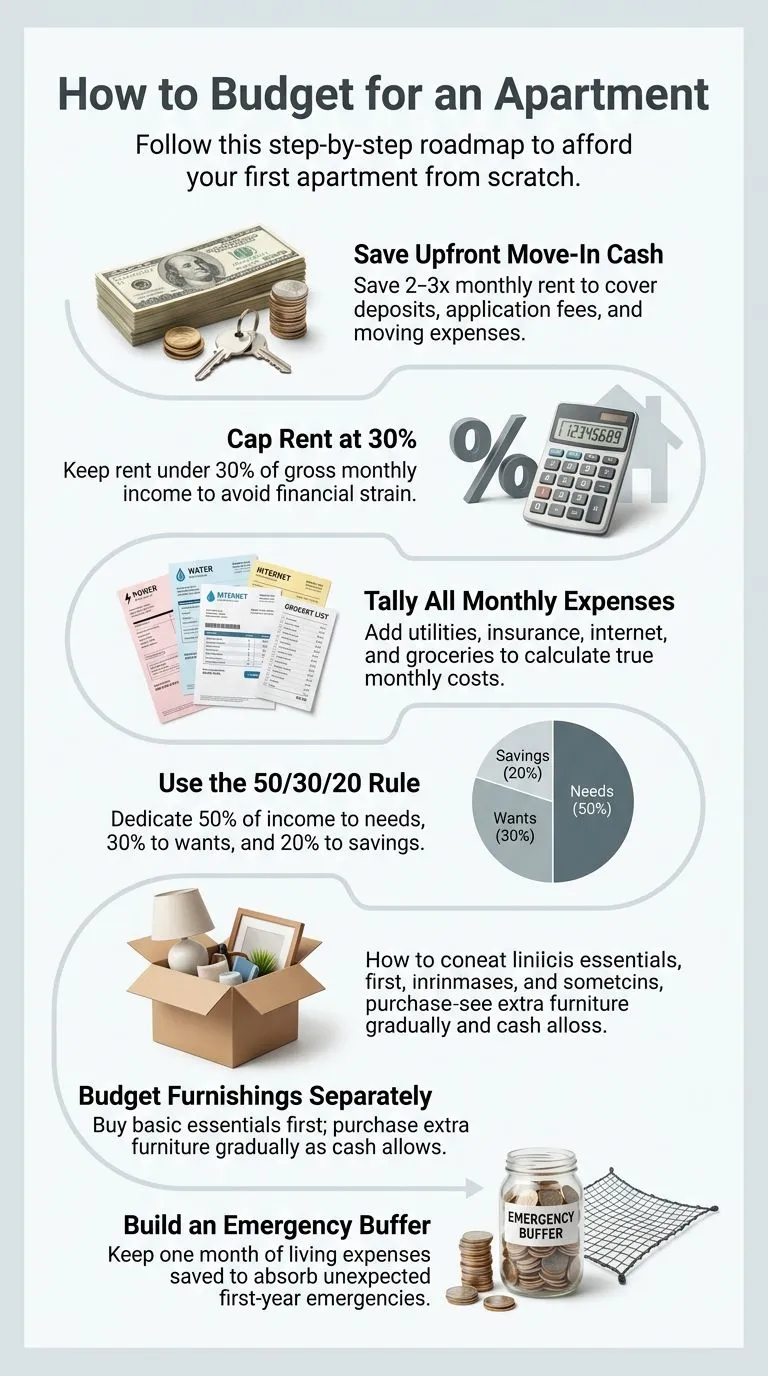
This is the number that catches people out. To get keys, you typically need more than one month’s rent in hand:
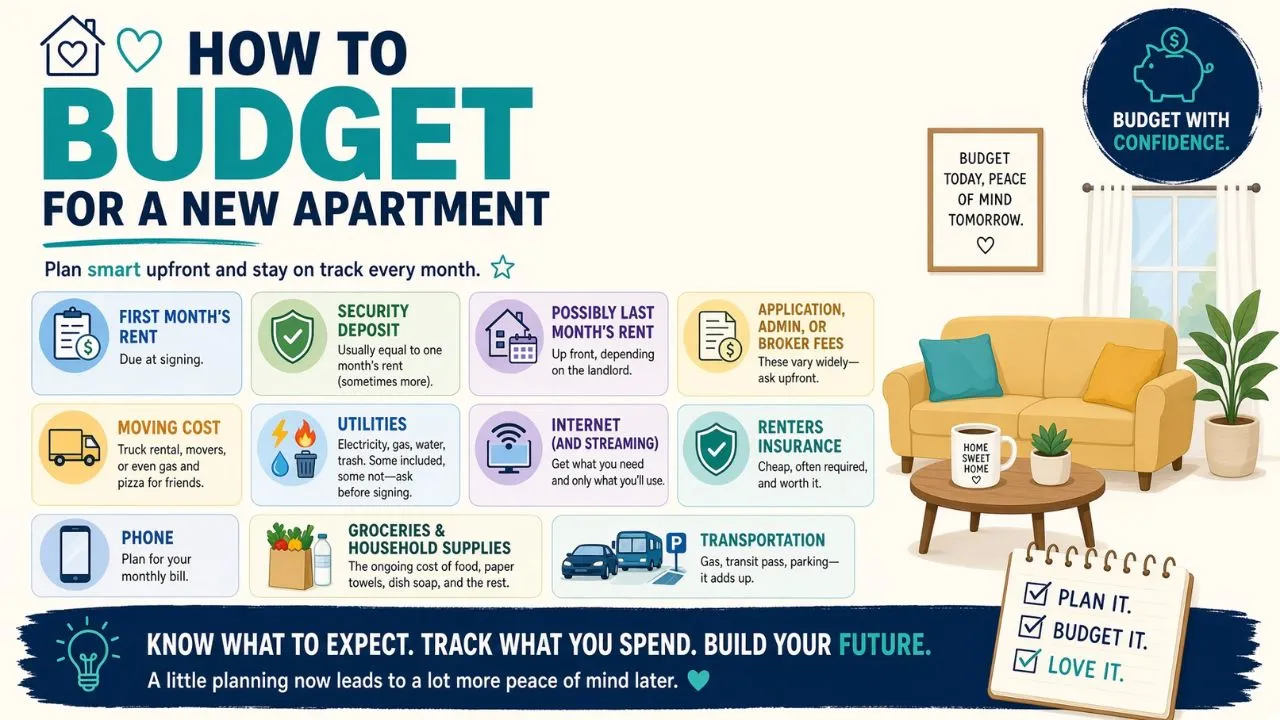
- First month’s rent, due at signing.
- A security deposit, usually equal to one month’s rent (sometimes more).
- Possibly last month’s rent up front, depending on the landlord.
- Application, admin, or broker fees, which vary widely.
- A moving cost, whether that’s a truck rental, movers, or gas and pizza for friends.
Add those up and your move-in cash is often two to three times the monthly rent before you’ve bought a fork. A $1,200/month apartment can easily need $2,500–$4,000 just to walk in the door. Save this number before you start seriously apartment hunting, not after you’ve fallen for a place.
Step 2: Cap Your Rent at What You Can Actually Afford
The classic rule is to keep rent at or under 30% of your gross monthly income. If you earn $3,000 a month before taxes, that’s roughly $900 in rent. It’s a guideline, not a law, but it exists because rent is the one bill you can’t easily cut once you’ve signed a year lease.
If your market makes 30% impossible, the honest fixes are a roommate (which splits rent, deposit, and utilities), a smaller place, or a cheaper neighborhood. Stretching to 40% or 45% “just for a year” is how people end up with no savings buffer and a lease they can’t break.
A quick sanity check: many landlords want to see that you earn about three times the monthly rent in gross income. If you don’t, expect to need a co-signer or a bigger deposit.
Step 3: Budget the Whole Monthly Cost, Not Just Rent
Rent is the headline. The full monthly cost is rent plus a stack of smaller bills that people forget until the first one arrives:
- Utilities — electricity, gas, water, trash. Some are included in rent, some aren’t; ask before signing.
- Internet (and any streaming you actually use).
- Renters insurance — cheap, often required, and worth it.
- Phone.
- Groceries and household supplies — the ongoing cost of paper towels, dish soap, and the rest.
- Transportation — gas, transit pass, parking.
Build these into your monthly plan from day one. A place that looks affordable on rent alone can quietly cost 20–30% more once the real bills land.
Step 4: Use the 50/30/20 Split to Structure It
Once you know your rent and monthly costs, a simple framework keeps the whole budget honest. The 50/30/20 rule splits your after-tax income into:
- 50% needs — rent, utilities, groceries, insurance, transport, minimum debt payments.
- 30% wants — dining out, subscriptions, hobbies, the fun stuff.
- 20% savings and debt payoff — emergency fund first, then goals.
Your rent lives inside that 50%, which is exactly why the 30%-of-income cap matters: go over on rent and you crowd out everything else. If the split doesn’t work, the problem is almost always the rent number, not your willpower with takeout.
Step 5: Budget for Furnishing Separately
Furniture is a one-time cost, so don’t fold it into your monthly budget and don’t panic-buy it all at move-in. Treat it as its own line and phase it out over your first month or two.
Realistically, a starter set of essentials runs around $600–$1,200 (see our first apartment starter kit for the exact list), and furnishing a full studio lands around $1,500–$3,000 new, or under $1,000 secondhand, as we break down in what it costs to furnish a studio. Buy the sleep-sit-eat basics first, then add the rest as cash allows.
Step 6: Build a Buffer Before You Spend on Extras
The last step is the one that separates a stressful first year from a smooth one: keep a small emergency buffer, ideally one month of expenses, before you spend on the nice-to-haves. First apartments generate surprise costs — a parking ticket, a broken phone, a utility deposit you didn’t expect — and a buffer means those don’t become a crisis.
The fastest way to protect that buffer is to not bleed money on avoidable stuff. A lot of first-year overspending is predictable, and we mapped the common traps in things renters waste money on.
Frequently Asked Questions (FAQs) on How to Budget for an Apartment
1. How much should I save before renting an apartment?
Aim to have your move-in cash saved first, which is typically two to three times the monthly rent (first month, a security deposit, possible fees, and moving costs), plus a starter-furniture budget of $600–$1,200 and ideally a one-month emergency buffer.
2. How much of my income should go to rent?
The standard guideline is no more than 30% of your gross monthly income on rent. Many landlords also want you to earn about three times the rent in gross income to qualify.
3. What’s the 50/30/20 rule for an apartment budget?
It splits your after-tax income into 50% needs (rent, utilities, groceries, insurance), 30% wants, and 20% savings and debt payoff. Rent lives inside the 50%, which is why keeping it near 30% of income matters.
4. What costs do people forget when budgeting for an apartment?
The usual surprises are utilities that aren’t included in rent, renters insurance, internet setup, one-time furnishing costs, and move-in fees beyond the deposit. Budget these before signing, not after.
About The Author