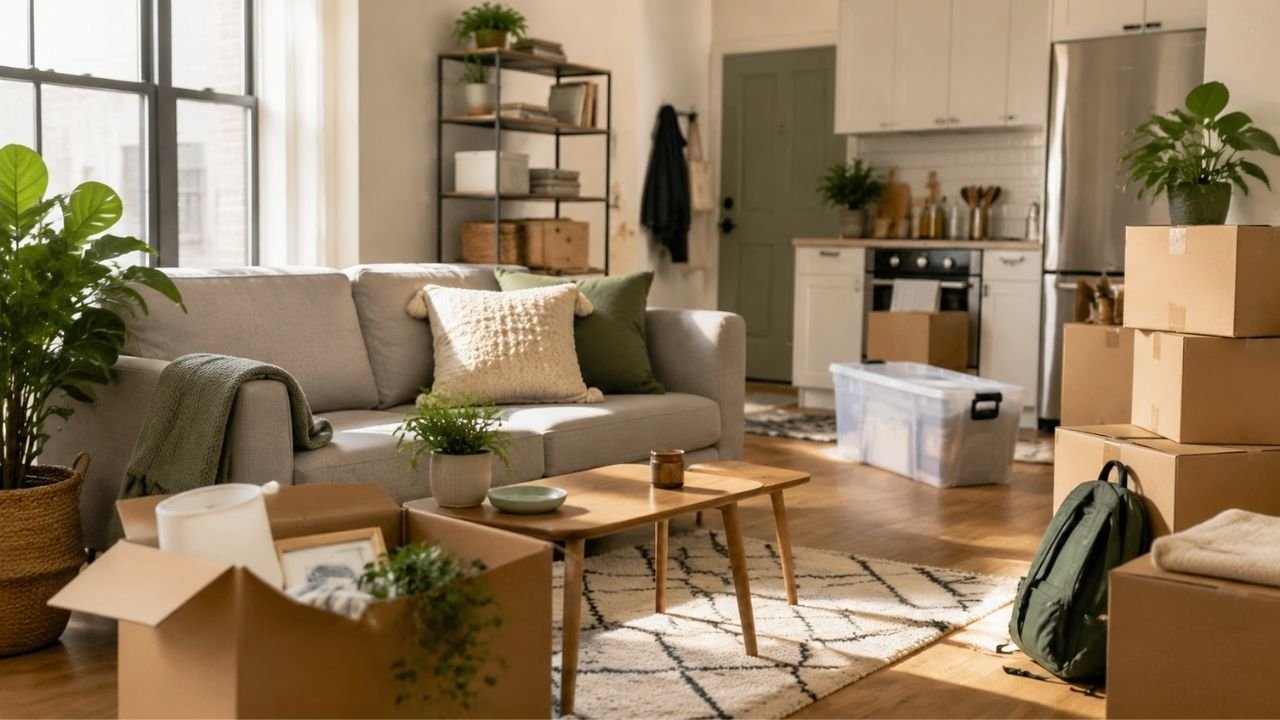
Moving into your first apartment is one of those experiences that sounds exciting in theory and feels overwhelming in practice. You walk through the door, look around at the empty walls and bare floors, and suddenly realize you don’t own a single trash can, dish towel, or fork. The question isn’t whether to buy things—it’s what to buy without burning through your entire budget on items you’ll use twice and regret forever.
This first apartment checklist is the result of weeks of cross-referencing budget moving guides, real renter forums, minimalist living resources, and the most common “things I wish I’d known” advice from first-time renters. The goal is simple: give you a research-backed list of 87 genuine essentials, plus the 12 commonly-bought items most people end up regretting.
A quick, honest note before you keep reading: I’m not a professional organizer, interior designer, or home improvement expert. This guide isn’t expert advice. It’s a researched, organized synthesis of the patterns that show up repeatedly across reliable apartment-prep resources. Treat it as a thoughtful starting point, not a personalized blueprint—every renter, apartment, and budget is different.
With that out of the way, let’s get into what to buy for your first apartment.
How to Use This First Apartment Checklist
Before you start shopping or pulling out your credit card, four principles will save you money and frustration:
Buy in tiers. Move-in essentials come first—bed, basic cookware, toilet paper, towels, cleaning supplies. Nice-to-haves come in week two through month one as you learn what you actually use. Trend-driven extras (matching decor sets, specialty gadgets, “starter kits”) come never, ideally.
Don’t furnish in one weekend. This is the most expensive mistake first-time renters make. You buy everything you think you need before you’ve lived in the space, and you end up with a coffee table that blocks your only walkway, curtains that don’t fit your windows, and a couch that overwhelms your living room. Move in. Live there for a week. Then start adding.
Used is usually fine. Couches, dressers, bookshelves, coffee tables, dining tables, lamps, small appliances, and basic dishware are constantly available on Facebook Marketplace, OfferUp, thrift stores, and estate sales for a fraction of retail. The exceptions are listed below.
Measure first, buy second. Furniture doesn’t fit through doorways. Beds block windows. Tables crowd kitchens. A $10 tape measure prevents hundreds of dollars in returns and regret. Measure your doorways, hallways, room dimensions, and window openings before you commit to anything bigger than a lamp.
Now, room by room, here’s the full apartment essentials list.
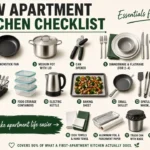
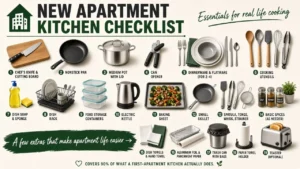
Kitchen Essentials (25 Items)
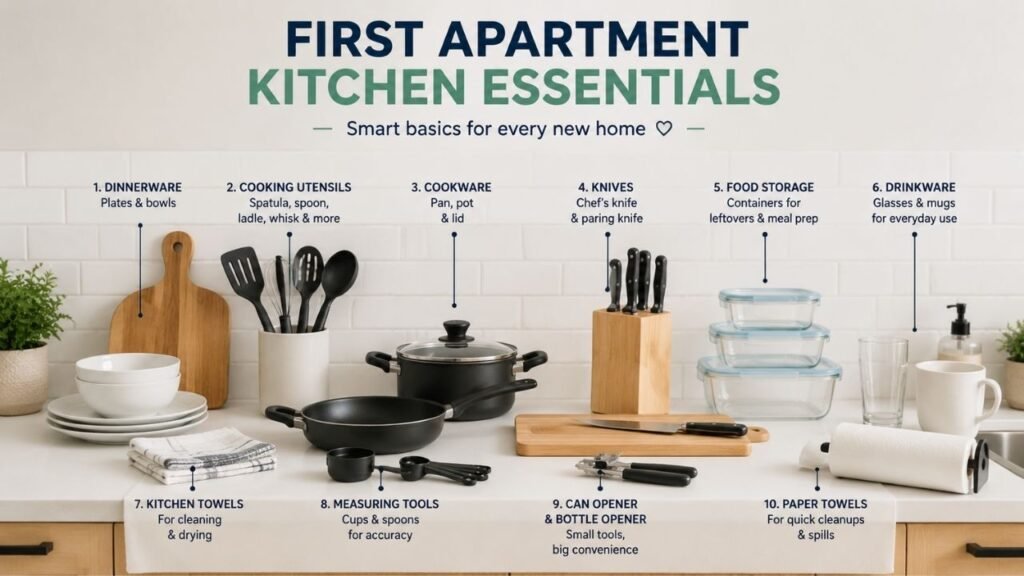
The kitchen is where first-time renters tend to over-buy more than anywhere else. The cookware aisle is a trap: 14-piece pot sets, knife blocks with 18 specialty blades, stand mixers in five colors. You don’t need any of it. You need a small core of versatile items that cover 95% of normal cooking. Here’s the full list of first apartment kitchen essentials.
Cookware and Cooking Tools (8 items)
- One 10-inch skillet (nonstick or cast iron) — Handles eggs, stir-fries, pancakes, grilled cheese, pan-fried vegetables, seared protein. If you buy one piece of cookware, buy this.
- One medium saucepan with lid — Boiling water, cooking pasta, heating soup, making oatmeal, simmering sauces.
- One large pot (6-quart stockpot) — Pasta for a group, big batches of soup, stews, blanching vegetables.
- Sheet pan (half-sheet size) — Roasting vegetables, sheet-pan dinners, baking, reheating leftovers in the oven instead of the microwave.
- Chef’s knife (8-inch) — The one knife you’ll use 90% of the time. Skip the 20-piece block.
- Paring knife — For peeling, small fruit, garlic, anything the chef’s knife is too big for.
- Cutting board (large, plastic or wood) — At least one decent-sized board. Wood is gentler on knives; plastic is dishwasher-safe.
- Wooden spoon and silicone spatula — Two utensils handle stirring, scraping, flipping, and folding. The 14-piece utensil set is overkill.
Prep, Measuring, and Storage (5 items)
- Mixing bowls (nesting set of 3) — Prep, mixing, serving salad, holding washed produce.
- Measuring cups (dry, 4-piece set) — Essential for almost any recipe.
- Measuring spoons (set) — Same reason.
- Colander or strainer — Pasta, rinsing produce, draining canned beans.
- Can opener — Easy to forget about until the night you bring home a can of soup and have no way in.
Dishware and Utensils (6 items)
- Plates (set of 4) — Dinner-sized. Four is enough unless you regularly host more.
- Bowls (set of 4) — Cereal, soup, pasta, ramen, ice cream. Used constantly.
- Drinking glasses (set of 4-6) — Simple, durable, dishwasher-safe.
- Mugs (2-4) — Coffee, tea, soup, instant noodles in a pinch.
- Silverware set (4-place setting minimum) — Forks, spoons, knives. A 16-piece set is plenty.
- Food storage containers (set with lids) — Glass or BPA-free plastic. Leftovers, meal prep, taking lunch to work. A 5-piece set goes a long way.
Small Appliances and Daily Consumables (6 items)
- Coffee maker or electric kettle — Buy what you actually drink. A French press costs $20 and outperforms most drip machines.
- Toaster or toaster oven — A toaster oven is more versatile if you have the counter space; it reheats pizza, toasts bread, and bakes small portions.
- Dish rack or drying mat — Critical if you don’t have a dishwasher. A foldable mat takes almost no storage.
- Trash can with lid — Get the lid. Trust me. The lidless ones lose every fight with your nose.
- Dish soap, sponges, and dish towels (2-3) — Restock the soap and sponges monthly. Towels go in the laundry weekly.
- Aluminum foil, plastic wrap, and parchment paper — Cover, store, line, bake. One of each lasts months.
Bedroom Essentials (14 Items)
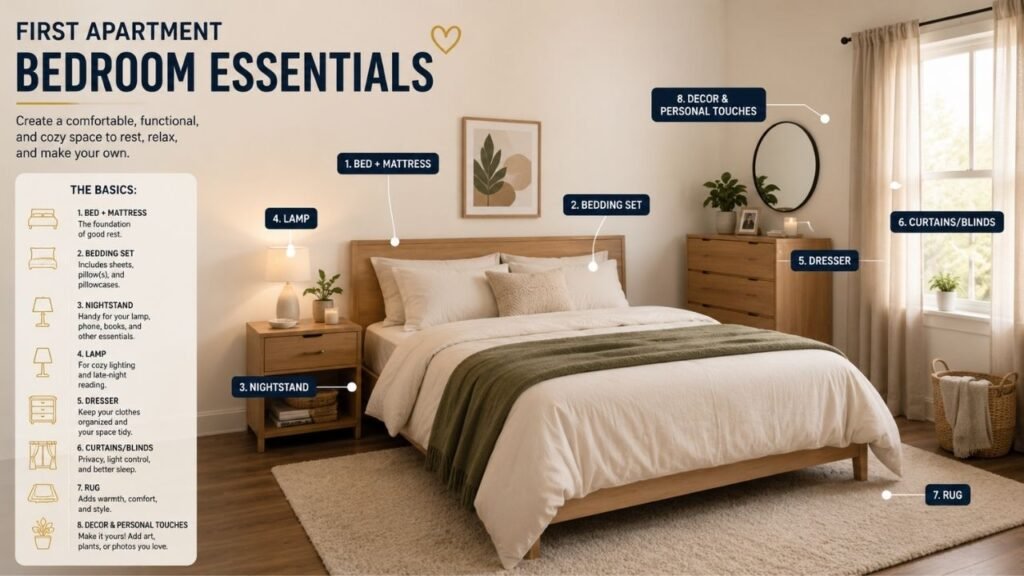
A functional bedroom needs much less than Pinterest suggests. You don’t need a four-poster bed, matching nightstands, three throw pillows, and a bench at the foot of the bed on move-in day. You need somewhere to sleep, somewhere to put clothes, and somewhere to set a glass of water. Learn how to make a small bedroom feel twice if you are worried about the space.
Sleep Setup (7 items)
- Mattress — Buy this new. Used mattresses carry hygiene risks (bed bugs, dust mites, allergens) and no warranty. This is the one big-ticket item where used isn’t worth it.
- Bed frame or platform base — Even a basic metal frame or a low platform bed under $150 works. The frame matters less than the mattress.
- Pillows (2) — One firmer for sleeping, one softer for reading or propping up. Replace every 1-2 years.
- Pillowcases (4) — Two on the bed, two in the wash. Buying a second set saves you laundry-day panic.
- Sheet sets (2) — Same logic. One on the bed, one clean and ready.
- Comforter or duvet with washable cover — A duvet cover is washable; a bare comforter usually isn’t. The cover saves you dry-cleaning fees.
- Mattress protector — Waterproof if possible. Saves your mattress from spills, sweat, and stains, and protects your warranty.
Storage and Function (7 items)
- Dresser or storage system — Doesn’t need to be fancy. A 3-drawer rolling cart or fabric storage cubes work for starter setups.
- Hangers (20-30) — Matching slim velvet hangers save closet space and keep clothes from slipping.
- Nightstand — A small table for water, phone, lamp, book, glasses. Even a milk crate works in a pinch.
- Bedside lamp — Soft lighting that doesn’t require getting out of bed to turn off.
- Charger setup or alarm clock — A dedicated phone-charging spot beside the bed prevents the cord chaos.
- Laundry hamper — Lidded helps with smell. Two compartments (lights/darks) saves a sorting step.
- Curtains or blackout shades — Especially critical if your windows face a streetlight, sunrise, or a neighbor.
Bathroom Essentials (13 Items)
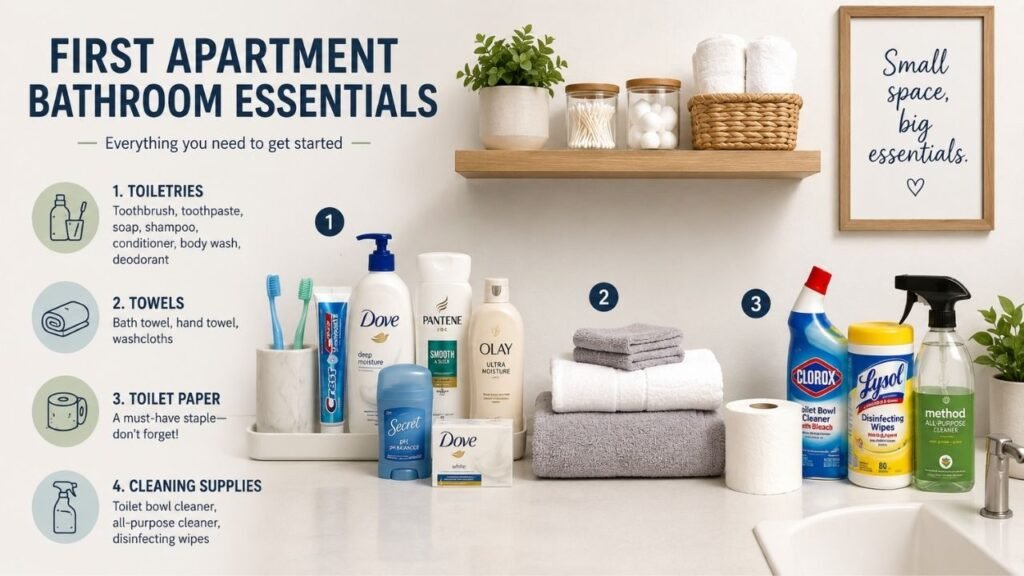
The bathroom is small but easy to under-equip. Forget toilet paper for one weekend or a shower curtain for one shower and you’ll understand why this list matters. If your bathroom space is small, you should know the ways on how to organize a tiny bathroom.
Bath and Shower (5 items)
- Shower curtain and liner — The liner is the cheap plastic one that actually does the waterproof work. The curtain is decorative. You need both.
- Bath towels (2) — Two minimum. Three if you skip laundry days. Quick-dry microfiber options take up less space.
- Hand towels (2) — Near the sink, replaced often.
- Washcloths (3-4) — For face, body, or quick countertop cleanups.
- Bath mat (non-slip) — Wet tile is genuinely dangerous, and a mat saves your floors from constant water.
Toilet and Sink (4 items)
- Toilet paper (multi-pack) — Always buy in bulk. You will always need more.
- Toilet brush with holder — Cheap, essential, and not optional.
- Plunger — Buy this before you need it. The night you need a plunger is not the night you want to drive to a store.
- Small trash can (lidded) — Lidded versions help with smell and keep things tidy.
Personal Care and Safety (4 items)
- Shower caddy or organizer — Especially helpful in small showers or if you share the bathroom. Tension-rod shelving works without drilling.
- Hair dryer — Even occasional users benefit from having one for cold mornings and emergencies.
- First aid kit — Bandages, antiseptic spray, pain relievers, allergy medication, antibiotic ointment, tweezers. A pre-assembled kit is under $20.
- Bathroom cleaner and toilet bowl cleaner — Two different products for two different surfaces. Bathrooms get dirty fast.
Living Room Essentials (10 Items)
The living room is where the “wait before buying” principle matters most. You can technically live without a couch for a few weeks. You cannot live without a bed. Prioritize accordingly. Check our guide on best budget sleeper sofas for small living room and plan accordingly.
- Seating (couch, loveseat, or two chairs) — Used is more than fine here. A $200 secondhand couch beats a $1,500 new one when you’re starting out.
- Coffee table or storage ottoman — A storage ottoman doubles as extra seating and hides clutter.
- Side table or end table — Somewhere to set a drink, lamp, or remote. Small is fine.
- Floor lamp or table lamp — Overhead lighting alone is harsh and makes spaces feel like waiting rooms. Lamps create warmth.
- TV or entertainment setup — Skip entirely if you stream on a laptop or tablet. This is optional, not essential.
- Surge protector or power strip — Outlets are always in the wrong place. A surge protector also protects your electronics during storms or power flickers.
- Area rug — Defines the space, dampens sound, softens the floor, and hides ugly carpeting or scratched hardwood.
- Throw blanket — Functional for chilly evenings and visually adds warmth to a couch.
- Throw pillows (2) — Two is the right number. Not seven. Two.
- Wall decor (1-2 pieces per main wall) — A framed print, poster, or mirror. Empty walls feel unfinished, but one statement piece per wall is enough.
Cleaning Supplies (12 Items)
When everything in the apartment is yours, the cleaning is also yours. Stock these from day one—not when the bathroom is already gross.
- All-purpose cleaner — One bottle handles countertops, tables, most surfaces.
- Glass and mirror cleaner — Or just diluted white vinegar in a spray bottle.
- Bathroom and tile cleaner — Tougher formula for soap scum, mildew, and grout.
- Floor cleaner — Match it to your floor type (hardwood, tile, vinyl). One bottle lasts months.
- Microfiber cloths (pack of 6-12) — Reusable, machine-washable, more effective than paper towels for most jobs.
- Paper towels — Reserved for messes you don’t want to reuse a cloth on.
- Broom and dustpan — Don’t skip these even with a vacuum. Crumbs and hair don’t always need the full vacuum.
- Vacuum cleaner — A small stick or cordless vacuum handles most apartments. Skip the full-size upright unless you have lots of carpet.
- Mop and bucket (or sponge mop with refills) — For hard floors. Spray mops are easier to store in small apartments.
- Trash bags (kitchen and small bathroom sizes) — Match them to your trash cans.
- Disinfecting wipes — Fast surface sanitizing for kitchen counters, doorknobs, light switches.
- Rubber gloves — Protect your hands from harsh cleaners and the inside of toilets.
Tools and Basic Hardware (8 Items)
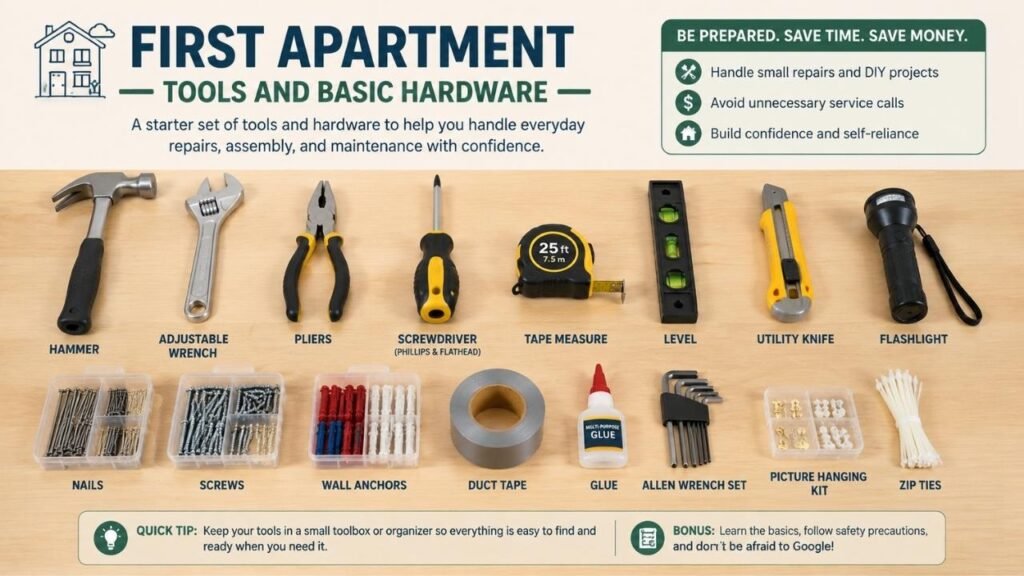
You will hang things, tighten things, and fix small problems. A basic toolkit pays for itself the first time you assemble flat-pack furniture, hang a frame, or tighten a wobbly chair.
- Hammer — Hanging frames, light assembly, occasional nail-removal.
- Screwdriver set (Phillips and flathead, multiple sizes) — Almost all flat-pack furniture relies on this. A 6-in-1 screwdriver is a great space-saver.
- Adjustable wrench — Plumbing fixes, furniture assembly, any nut-and-bolt situation.
- Tape measure (25-foot) — Furniture shopping, art placement, rug sizing, curtain measurements.
- Level — Anything you want to hang straight—frames, shelves, curtain rods.
- Flashlight with extra batteries — Power outages, dark closets, looking under furniture for the thing you dropped.
- Extension cords and power strips — Outlets are always in the wrong spot.
- Command strips, picture hooks, and basic nails — Renter-safe hanging supplies that won’t damage walls and risk your security deposit.
Paperwork, Safety, and Admin (5 Items)
The least exciting category and arguably the most important. Skipping any of these can cost you your security deposit, your insurance claim, or—in worst cases—your safety.
- Renter’s insurance policy — Usually $10-$20 per month for $20,000+ in coverage. Many leases now require it, and even when they don’t, it covers theft, fire, water damage, and liability. One of the highest-value purchases on this entire list.
- Document folder or filing box — Your lease, insurance documents, IDs, utility setup paperwork, appliance warranties, and a copy of your move-in inspection. Keeping these together prevents future headaches.
- Small kitchen-rated fire extinguisher (ABC type) — Most home fires start in the kitchen. A small ABC extinguisher under $30 handles common cooking, electrical, and trash fires.
- Smoke detector and carbon monoxide detector (or batteries for existing units) — Test them on move-in day. Replace batteries annually. Required by law in most places.
- Emergency contact list and small cash reserve — Landlord, building maintenance, utilities, locksmith, plumber, nearest urgent care. A $50-$100 cash buffer for emergencies (locked out, card declined, utility deposit) is genuinely useful.
The 12 Things You Don’t Need (Yet, or Ever)
These are the most commonly bought, least commonly used first-apartment items. Save the money or wait until you’ve actually lived in the space long enough to know whether you’d use them. You must know about the things renters waste their money.
- Stand mixer (KitchenAid and similar) — Beautiful, expensive, used by most people twice a year. A $15 hand mixer covers 90% of baking needs in a fraction of the storage space.
- Espresso machine — Unless you’re already making espresso daily at home, a French press or pour-over costs under $30 and produces excellent coffee.
- Bread maker — Counter space is precious in apartments. Most bread makers get used twice, then live in a closet forever.
- Full china or formal dinnerware set — You’re not hosting state dinners. Basic four-place dishware handles years of normal life.
- Specialty kitchen gadgets (avocado slicer, egg cuber, garlic peeler, banana slicer) — A chef’s knife does all of this, faster, with fewer things to store.
- Matching furniture sets — They look great in the store, lock you into one aesthetic, and feel stale within a year. Mixed-source furniture ages better.
- King-sized anything in a small apartment — Oversized furniture makes small spaces feel cramped and limits your layout options.
- A full block of “good” knives — One 8-inch chef’s knife and a paring knife handle 95% of cooking tasks. The bread knife is the only third addition worth considering.
- Decorative throw pillows in bulk — They migrate to the floor every night and become an obstacle course. Two pillows per couch is the cap.
- Robot vacuum (right away) — Live in the apartment first. Many people return them within months. Decide based on your actual lifestyle, not aspirational cleanliness.
- Premium curtains before measuring — Standard-sized curtains rarely fit standard-sized windows perfectly. Measure first, then buy.
- Expensive art before move-in — Live in the space for a few weeks. You’ll see what walls need what kind of piece. Buying art before you know your space leads to mismatched purchases and returns.
Budget Tips for Your First Apartment
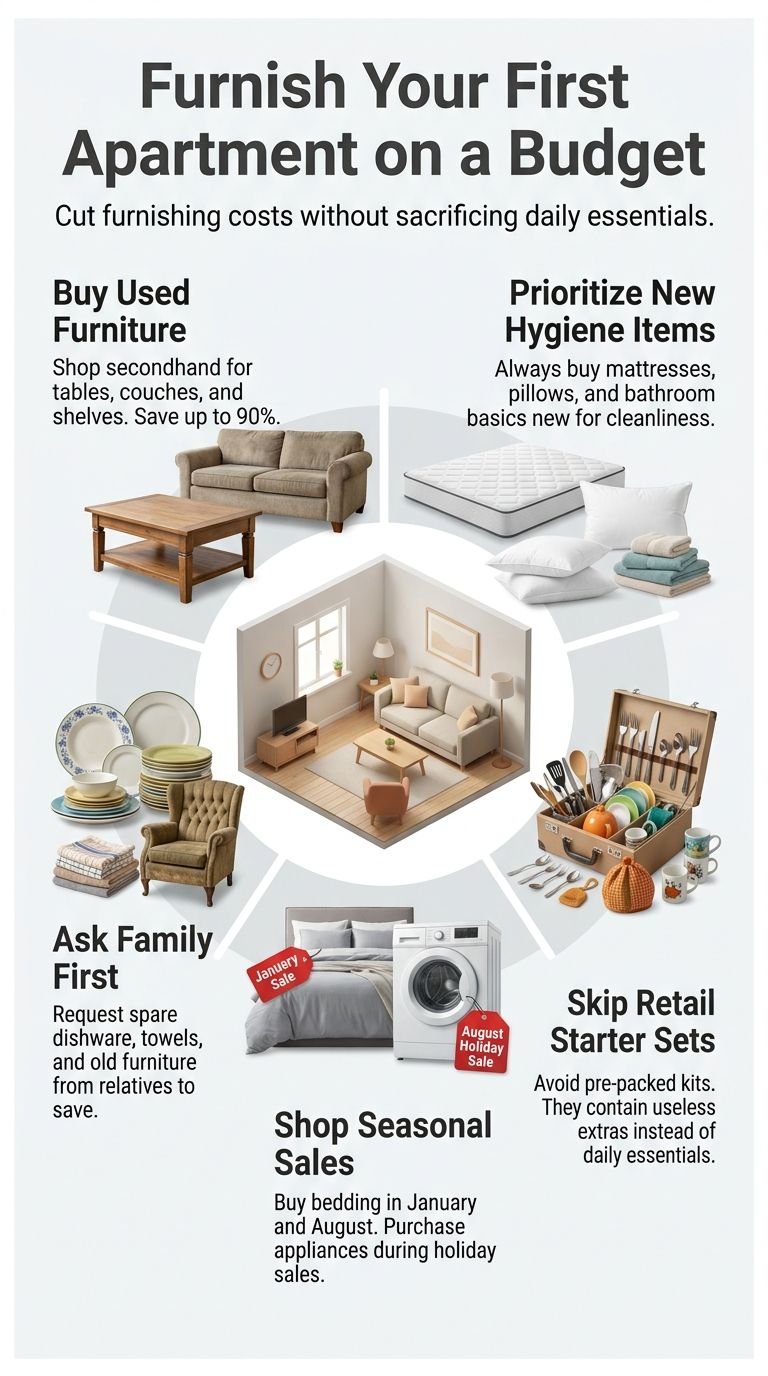
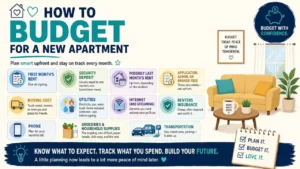
Most furnishing guides assume you have $2,000-$3,000 to spend in a single weekend. Most first-time renters don’t. Here’s how to cut the total cost without sacrificing the essentials. For more pricing solution, check the guide on IKEA vs Wayfair for small apartments and first time renters.
Shop secondhand for big furniture. Couches, dressers, dining tables, coffee tables, bookshelves, and lamps are constantly listed on Facebook Marketplace, OfferUp, Craigslist, and at thrift stores for 70-90% off retail. Inspect secondhand upholstered furniture carefully for bedbugs (check the seams and underside), but otherwise this is the single biggest cost-saver available.
Buy new for hygiene-critical items. Mattresses, pillows, toilet brushes, plungers, washcloths, and any underwear-adjacent linens should be new. Almost everything else on this apartment essentials list is fair game used.
Skip the “starter sets” at big-box stores. Those 50-piece “first apartment kits” often pad the count with items you’ll never use (specialty utensils, extra mugs, decorative bowls) while skimping on the items you’ll use daily (good knives, durable pots). Building your own list from this checklist is cheaper and more useful.
Time your purchases around sales. Bedding goes on sale during white sales in January and August. Furniture drops during Memorial Day, Labor Day, and Black Friday. Small appliances see deep discounts during back-to-school season and the weeks after major holidays. If your move-in date is flexible, time it.
Ask your family before buying. Parents and relatives often have duplicate dishware, extra towels, spare cookware, unused small appliances, and old furniture in storage. A single phone call can knock 20-30% off your total furnishing cost.
Use libraries, dollar stores, and discount chains. Dollar stores stock surprisingly decent kitchen utensils, cleaning supplies, basic dishware, and storage containers. Discount chains like Marshalls, HomeGoods, Ross, and TJ Maxx carry name-brand kitchen and bathroom items at 40-60% off.
First Apartment Checklist: Frequently Asked Questions
1. How much should I budget for furnishing a first apartment?
Most research and budget guides suggest $1,000-$3,000 for a basic setup if you buy mostly new from budget retailers. You can bring this down to $300-$800 by sourcing furniture secondhand and shopping discount or dollar stores for kitchen and bathroom items. The exact number depends on what you already own, what family can contribute, and how much you’re willing to buy used.
2. What’s the one thing most first-time renters forget?
A plunger. Followed closely by a shower curtain liner, a first aid kit, a tape measure, and a good can opener. None of these feel urgent until you suddenly need them and the store is closed.
3. Do I really need renter’s insurance?
Most leases require it now, and even when they don’t, it’s typically $10-$20 per month for $20,000+ in coverage of theft, fire, water damage, and personal liability. It’s one of the highest-value purchases on this list, especially given how much it covers for how little it costs.
4. Should I buy kitchen items new or used?
Cookware (pots, pans, baking sheets), knives, and small appliances are generally great secondhand if they’re clean and in good condition. Cutting boards, sponges, dish towels, food storage containers, and disposable items are cheap enough to buy new. Avoid used cast iron unless you know how to restore the seasoning.
5. What’s the absolute minimum I need before move-in day?
A bed setup (mattress, sheets, pillow), toilet paper, a shower curtain and liner, one towel, soap, basic dishware (one plate, bowl, glass, utensil set), one pot, one pan, trash bags, and basic cleaning supplies. Everything else on this apartment essentials list can wait days or weeks.
6. Is it worth buying a vacuum if my apartment is mostly hard floors?
A small stick vacuum or handheld vacuum is genuinely useful even on hard floors—it handles crumbs, dust, hair, and corners better than a broom. But you can absolutely get by with a broom, dustpan, and microfiber mop if budget is tight.
7. How do I avoid buying things I don’t need?
The single best filter: wait. If you can’t decide whether you need an item, wait two weeks. If you’ve genuinely needed it more than three times in those two weeks, buy it. If you’ve forgotten about it, you didn’t need it.
Final Thoughts on Your First Apartment Checklist
The biggest mistake first-time renters make isn’t forgetting items—it’s buying too much, too fast. A complete first apartment checklist isn’t the longest one; it’s the one tailored to how you actually live. Furnish the essentials above, settle into your space for a few weeks, and then add what you’ve actually found yourself reaching for.
Print this list, cross items off as you acquire them, and don’t pressure yourself to finish in one weekend. A well-equipped apartment takes a few months to settle into—and honestly, that’s part of the fun. You’re not building a magazine spread; you’re building a home, one practical purchase at a time.
If this guide helped you think through what to buy for your first apartment, bookmark it for the next move and share it with anyone else about to make the leap. Future you, surrounded by exactly the things you need and none of the things you don’t, will thank present you for the restraint.
About The Author