Your neighbor’s TV, hallway chatter, late-night traffic: you hear all of it, and sleep is getting harder. The cheapest way to make a room quieter is sealing air gaps around the door and windows, because sound slips through any gap air can. Below is a fixes-ranked chart, a step-by-step plan, and what foam panels can’t do.
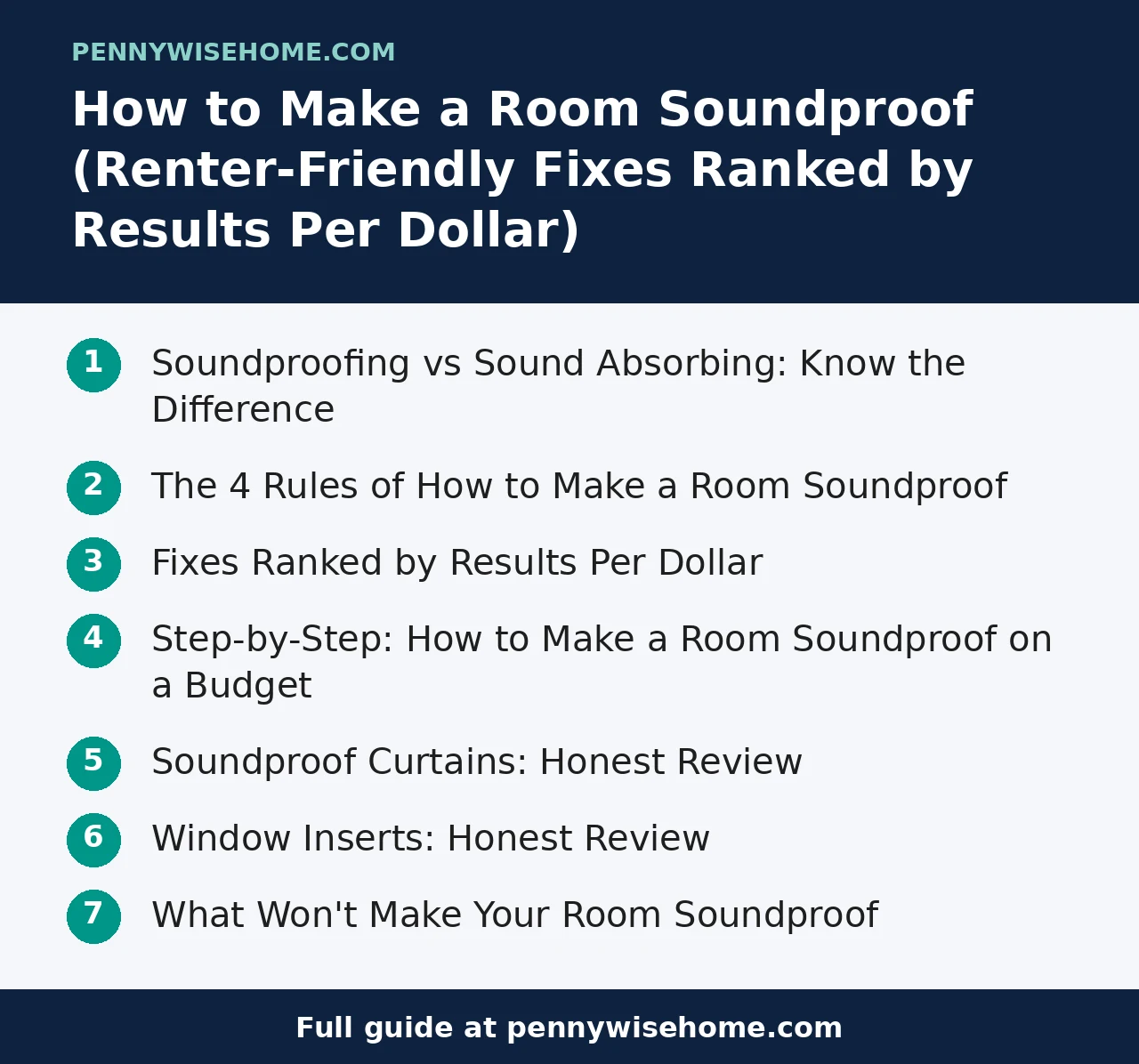
Soundproofing vs Sound Absorbing: Know the Difference
Before you learn how to make a room soundproof, know this: most “soundproofing” products online don’t block outside noise at all. They absorb echo inside the room.
| Blocking (soundproofing) | Absorbing (acoustic treatment) | |
|---|---|---|
| Goal | Stop noise coming in or out | Reduce echo inside the room |
| How | Mass, airtight seals, separation | Soft, porous materials |
| Examples | Door sweeps, solid doors, extra drywall, window inserts | Foam panels, rugs, curtains, bookshelves |
| Fixes neighbor noise? | Yes | Barely |
Here’s the catch: foam panels on a shared wall make your room sound better, but your neighbor’s bass still comes through. Not even close.
The 4 Rules of How to Make a Room Soundproof
- Seal: close every air gap. Sound travels through cracks first.
- Add mass: heavier, denser surfaces block more sound.
- Separate: keep layers from touching so vibration can’t pass through.
- Dampen: stop surfaces from ringing, like a hand on a drum.
Renters can do the first two easily. The last two usually mean construction.
Fixes Ranked by Results Per Dollar
| Fix | Cost | Noise it helps | Renter-safe? |
|---|---|---|---|
| Door sweep + weatherstripping | $15–$40 | Hallway voices, TV | Yes (adhesive or slide-on) |
| Acoustic caulk on window gaps | $10–$20 | Street noise | Ask first; removable caulk exists |
| Thick rug + dense pad | $80–$250 | Footsteps, echo | Yes |
| Heavy curtains, wall to wall | $40–$150 | Mid/high street noise | Yes with tension or no-drill rods |
| Bookshelf on shared wall | $50–$200 | Voices through wall | Yes |
| Window inserts (e.g., Indow) | Hundreds per window | Traffic, sirens | Yes, press-fit |
| Solid-core door | $150–$400+ | Most indoor noise | Landlord approval |
| Extra drywall + damping compound | $$$ | Everything | No |
Key takeaway: start with the door. It’s usually the weakest spot in the room.

Step-by-Step: How to Make a Room Soundproof on a Budget
Step 1: Find the Leaks
Picture this: it’s night, you turn off the room lights, and a friend shines a flashlight along the door from the hallway. Every glowing gap is a sound leak. Do the same around windows.
Step 2: Fix the Door
Most apartment interior doors are hollow-core with a gap at the bottom you could slide a phone under. That’s a direct path for noise.
- Add a door sweep or a slide-on under-door seal.
- Apply foam or rubber weatherstripping along the frame where the door closes.
- Hang a heavy moving blanket on the back of the door at night for extra mass.
Step 3: Tackle the Windows
Windows are thin, so they leak low rumble and sirens. Close gaps with removable weatherstripping, then layer heavy curtains that extend past the frame on all sides. For big results, press-fit acrylic window inserts add an air gap without screws.
Step 4: Add Mass to Shared Walls
The truth is, you can’t add drywall in a rental, but you can add furniture mass. A full bookshelf against the shared wall blocks more than a foam panel. Mount nothing heavy without permission.
Step 5: Soften the Room
Rugs, upholstered furniture, and curtains cut echo, so noise that does get in feels less harsh. This is where acoustic panels finally help.
Soundproof Curtains: Honest Review
Thick “noise reducing” curtains, like the popular triple-weave sets sold on Amazon, are a common first buy when people search how to make a room soundproof.
- Con 1: They mostly block light. Owners often report only a small drop in street noise.
- Con 2: They do little for low bass, like trucks or subwoofers.
- Con 3: Heavy panels can pull cheap tension rods down.
Who Should Skip This: anyone fighting a neighbor’s bass. Fix the door and wall first.
Window Inserts: Honest Review
Acrylic inserts like Indow press into the window frame with a compression edge, creating a second layer and an air gap.
- Con 1: Custom-made and expensive, often hundreds of dollars per window.
- Con 2: You have to remove them to open the window.
Who Should Skip This: renters moving within a year, unless the next place has identical windows.
What Won’t Make Your Room Soundproof
That brings us to the biggest mistake people make: buying the wrong stuff first.
- Egg crate foam: barely absorbs, doesn’t block.
- “Soundproof” paint: won’t stop loud or low-frequency noise.
- Thin foam panels on a shared wall: help echo, not neighbors.
- White noise alone: masks noise, which helps sleep, but doesn’t reduce it.
On the flip side, a white noise machine plus a door sweep is a surprisingly strong combo for light sleepers.
Renter Rules for Soundproofing
Stick to removable fixes: adhesive weatherstripping, press-fit inserts, freestanding furniture, rugs, and curtains on tension or no-drill rods. Our guide to no drill blinds covers window hardware that leaves no holes.
Want more quiet-room ideas for small spaces? See how to organize small spaces and our 100 sq ft bedroom ideas.
FAQs
What is the cheapest way to soundproof a room?
Seal the gaps. A door sweep and weatherstripping cost under $40 and fix the biggest leaks.
Can you soundproof a room without construction?
You can make it much quieter. True soundproofing usually needs added drywall or new doors.
Do acoustic panels block noise from neighbors?
Not much. They reduce echo inside your room but add little mass to stop sound passing through.
Do soundproof curtains really work?
They reduce some higher-pitched street noise and echo, but they won’t stop bass or loud voices.
Bottom Line
How to make a room soundproof starts with the cheap stuff: seal the door, seal the windows, then add mass with furniture and heavy curtains. Save foam panels for echo, not neighbors. Do the $40 door fix tonight and you’ll hear the difference by bedtime.