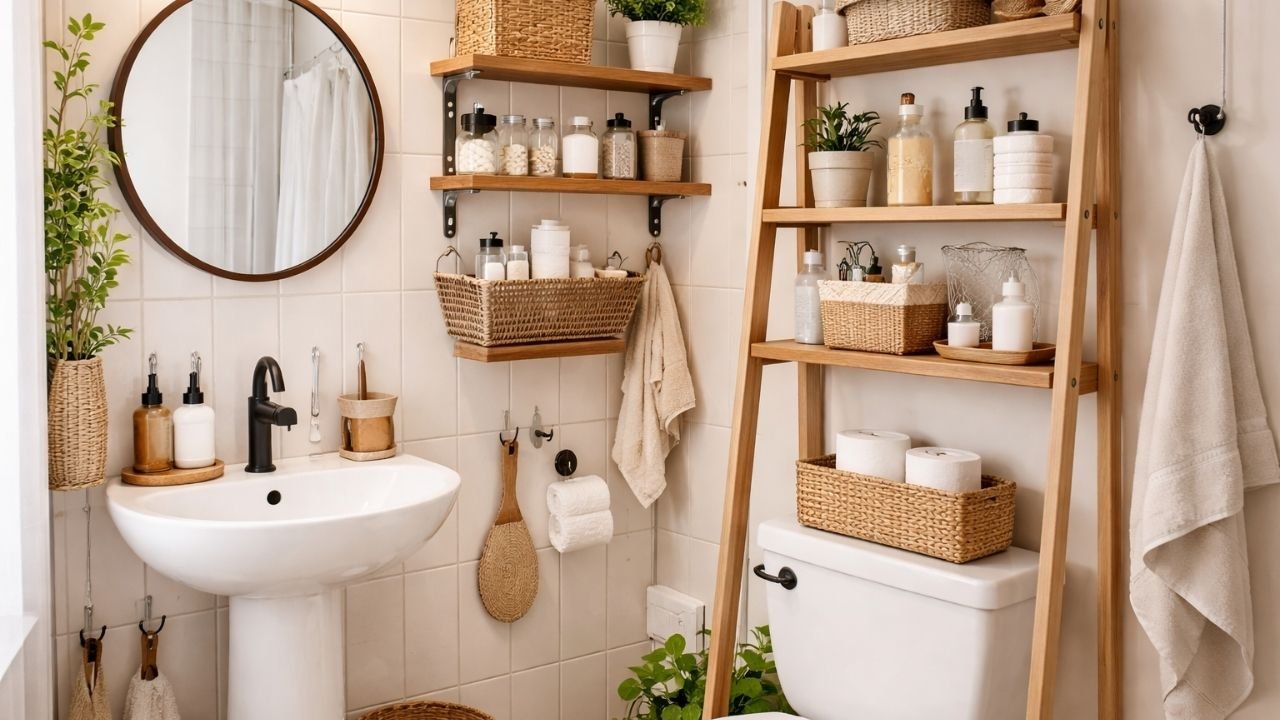
A bathroom with no counter space is one of the most common — and most frustrating — small-space layouts in apartments, older houses, and urban rentals. Pedestal sinks, wall-hung sinks, and tiny half-baths look clean in design photos, but they leave you with nowhere to put a toothbrush, let alone a hair dryer, lotion, contact lens case, and a stack of hand towels.
The good news: a small bathroom with no counter space can be organized into something that genuinely works. The trick isn’t more storage — it’s smarter use of vertical space, doors, walls, and the dead zones above and around fixtures.
This guide pulls together 11 tiny bathroom storage ideas that consistently appear in organizing expert recommendations, real renter and homeowner reviews, and rental-friendly product roundups. Some cost under $20. Most install without tools or permanent damage, which matters if you rent. None require renovation.
Each solution below includes how it works, who it’s best for, and what to watch out for. At the end, you’ll find a quick budget breakdown and a few items to skip from typical Pinterest “tiny bathroom hacks” lists.
What “No Counter Space” Actually Means
Most “small bathroom no counter space” problems fall into one of three layouts:
- Pedestal sink bathrooms — no vanity at all, just a sink on a column
- Wall-mounted sink bathrooms — a narrow rim around the sink, but no flat surface for storing anything
- Tiny vanities — technically a counter, but maybe four inches of usable surface area
The solutions below work for all three. The principle is the same: stop competing for the counter and start using everything else.
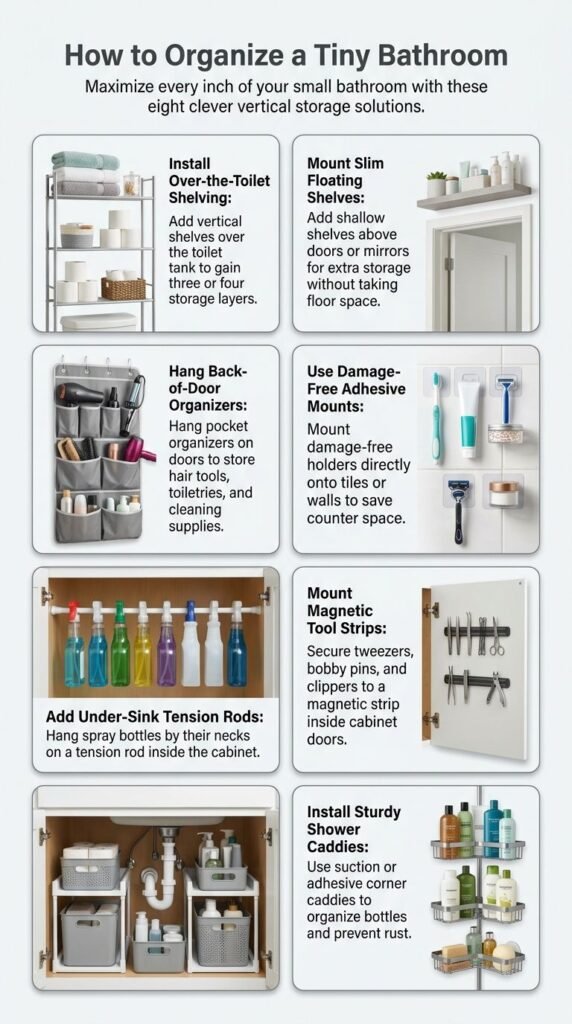
How to Organize a Tiny Bathroom: 11 Solutions
1. Over-the-Toilet Storage
The single most impactful solution for a small bathroom with no counter space. The area above the toilet is almost always wasted vertical space — usually 24–30 inches of clear wall stretching to the ceiling. An over-the-toilet shelving unit (sometimes called an étagère or “spacesaver”) sits straddling the tank, giving you three to four shelves of storage where there was nothing.
Open-shelf versions are renter-friendly and require zero installation — they freestand over the toilet. Cabinet-style versions hide clutter but cost more. Both come in widths from 22 to 28 inches; measure your toilet’s overall width before buying.
Watch out for: Tanks with awkward shapes (some elongated toilets push the back of the unit out). Cheaper units wobble — look for adjustable feet.
2. Floating Wall Shelves
Two or three slim floating shelves above the toilet, above the door, or beside the mirror add storage without taking up floor space. Shelves between 4 and 6 inches deep are wide enough for most bathroom items but don’t stick out enough to feel intrusive.
For renters, peel-and-stick or Command Strip–mounted shelves work for lighter items (toiletries, small plants, decorative jars). For heavier items, you’ll need to drill into studs or use drywall anchors, which means small holes to patch when you move.
Watch out for: Steam warping unsealed wood. Pick painted, lacquered, or metal shelves for bathroom use.
3. Back-of-Door Organizer
The inside of the bathroom door is the single most underused storage surface in any bathroom. An over-the-door pocket organizer adds 12–25 storage pockets for everything that doesn’t need to be visible: extra toilet paper, cleaning supplies, hair tools, sunscreens, first aid items, makeup.
Clear pocket organizers let you see what’s there; fabric ones hide clutter but make you remember what’s inside. Both hang on the door without tools and remove cleanly. Before buying organizers, check my list of things renters waste money on.
Watch out for: Doors that don’t fully close because of bulky pockets. Measure the door clearance first.
4. Adhesive Wall Organizers
This is where modern apartment-friendly products earn their keep. Brands like Command, 3M, and various lookalikes make adhesive toothbrush holders, razor holders, soap dispensers, hair dryer holders, and small shelves that mount directly to tile or painted wall without screws, anchors, or damage when removed.
The key is choosing the right adhesive for your wall type — most are rated for either tile/glass or painted drywall, not both. Read the package.
Watch out for: Humidity can degrade adhesive over time. Wipe walls clean and dry before mounting, and expect to replace adhesive strips every 6–12 months.
5. Tension Rod Under the Sink
A simple spring tension rod installed inside the under-sink cabinet (if you have one) becomes an instant hanging system for spray bottles. The bottle necks loop over the rod, leaving the floor of the cabinet free for bins and baskets.
This trick works in pedestal sink bathrooms too — install a tension rod between two walls in any narrow gap and hang lightweight items like washcloths or thin baskets.
Watch out for: Heavy bottles can sag the rod over time. Use multiple rods for weight distribution if you’re hanging a lot.
6. Magnetic Strip Inside the Medicine Cabinet
A thin magnetic strip mounted inside the medicine cabinet door, or directly to the wall, holds tweezers, nail clippers, bobby pins, small scissors, and metal tools that would otherwise float loose in a drawer or pile on the (nonexistent) counter. Costs about $5.
The same trick works for hairpins and metal hair accessories — a small magnet on the inside of a cabinet door keeps them from migrating across the bathroom.
Watch out for: Non-metal items don’t stick. This is a supplemental solution, not a primary one.
7. Under-Sink Risers and Stackable Bins
If you have an under-sink cabinet, the space is almost always wasted because of the plumbing. A two-tier sliding shelf riser or stackable plastic bins double the usable storage by adding a second level above the pipes.
Look for risers with adjustable widths or notches for pipes. Stackable bins from brands like Sterilite, or generic dollar-store versions, work fine — you don’t need to spend much here.
Watch out for: Cabinet shelves that don’t sit flat because of plumbing curves. Measure twice.
8. Suction Cup or Tile-Mounted Shower Caddy
The shower is its own storage zone, and the over-the-showerhead caddy is the worst version of it — it slides, rusts, and dumps bottles into the tub. Tile-mounted suction caddies or adhesive-mounted corner shelves are sturdier and stay put.
For ceramic or glass tile, modern industrial suction cups (the ones with locking levers) hold 5 to 15 pounds depending on the model. For long-term mounting, adhesive shower caddies stay up for years if installed on clean, dry tile.
Watch out for: Textured or stone tiles don’t hold suction well. Adhesive options only for those.
9. Wall-Mounted Hair Tool Holder
Hair dryers, flat irons, curling irons, and round brushes are bulky, hot, and impossible to store in drawers without a heat-safe pocket. A wall-mounted hair tool holder (either adhesive or screw-mounted) gets them off the floor and the (nonexistent) counter, ventilates them while they cool, and keeps cords contained.
Look for holders with separate compartments for the tool and the cord — single-pocket versions get tangled fast.
Watch out for: Mounting too close to fabric (curtains, towels). Hot tools need ventilation.
10. Slim Rolling Cart
If there’s a narrow gap between the toilet and the wall, or beside the sink, a slim rolling cart fits in the dead space and rolls out when you need it. IKEA’s Råskog is the famous example, but plenty of alternatives exist for $25–$50.
Three tiers give you toiletries on top, hair tools in the middle, and cleaning supplies on the bottom. The mobility means you can roll it out of the way when guests visit.
Watch out for: Width. Measure the gap before buying — most rolling carts are 14–18 inches wide.
11. Towel Ladder or Wall Hooks Instead of a Bar
The classic towel bar takes up valuable horizontal wall space and only holds one towel. A leaning towel ladder (which requires zero installation) holds four to six towels in the footprint of a single bar, and adds a decorative element.
Alternatively, replace the towel bar entirely with two or three hooks — they hold more towels in the same space, dry them faster, and look cleaner.
Watch out for: Ladders that wobble. Anti-slip pads on the feet help, especially on tile floors.
What to Skip From Most “Tiny Bathroom Hacks” Lists
A few solutions show up constantly in viral lists but underdeliver in real bathrooms:
- Mason jar wall mounts — cute but small. They hold maybe one toothbrush each and look cluttered fast.
- Pegboards — work better in workshops than bathrooms. Steam and humidity warp them, and most bathroom items don’t peg neatly.
- Tiered rolling carts wider than 18 inches — they look great in photos until you try to fit them in a real tiny bathroom.
- Wire baskets without liners — small items fall through. Add a fabric liner or pick solid bins.
- Floating shelves over the toilet that block the tank lid — obvious in hindsight, but the most common installation mistake. Always leave at least 10 inches of clearance above the tank so the lid can lift for plumbing access.
A Smart Budget Approach
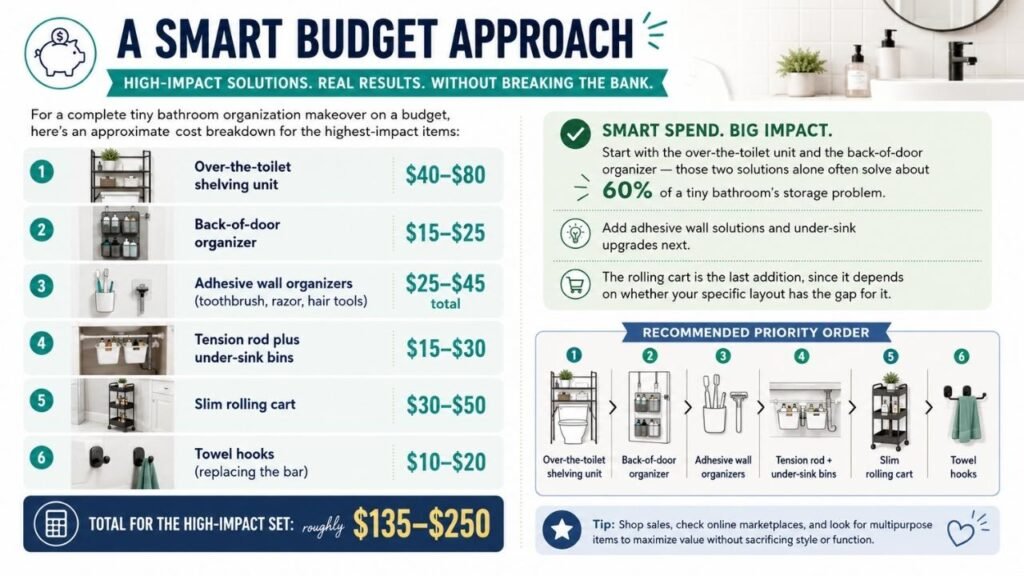
For a complete tiny bathroom organization makeover on a budget, here’s an approximate cost breakdown for the highest-impact items:
- Over-the-toilet shelving unit: $40–$80
- Back-of-door organizer: $15–$25
- Adhesive wall organizers (toothbrush, razor, hair tools): $25–$45 total
- Tension rod plus under-sink bins: $15–$30
- Slim rolling cart: $30–$50
- Towel hooks (replacing the bar): $10–$20
Total for the high-impact set: roughly $135–$250.
Start with the over-the-toilet unit and the back-of-door organizer — those two solutions alone often solve about 60% of a tiny bathroom’s storage problem. Add adhesive wall solutions and under-sink upgrades next. The rolling cart is the last addition, since it depends on whether your specific layout has the gap for it. These same ideas work in the bedroom too. Here’s how to make a small bedroom feel twice as big.
Quick Reference: All 11 Solutions
- Over-the-toilet shelving unit
- Floating wall shelves
- Back-of-door pocket organizer
- Adhesive wall organizers (toothbrush, razor, hair tools)
- Tension rod under the sink
- Magnetic strip inside the medicine cabinet
- Under-sink risers and stackable bins
- Suction cup or tile-mounted shower caddy
- Wall-mounted hair tool holder
- Slim rolling cart in a dead-space gap
- Towel ladder or wall hooks instead of a bar
Frequently Asked Questions
What’s the best storage solution for a pedestal sink bathroom?
The over-the-toilet shelving unit is the highest-impact single purchase, since pedestal sink bathrooms have no vanity at all and the toilet area is usually the only available vertical zone. Pair it with a back-of-door organizer and adhesive wall mounts for toothbrushes and razors, and you’ve covered most daily-use items without touching the sink.
Are adhesive wall organizers actually strong enough?
Yes, for the weight ranges they’re rated for — and no, if you ignore the rating. Most Command-style adhesive products hold 1–5 pounds reliably on clean, dry surfaces. They fail in two scenarios: when the wall wasn’t cleaned with rubbing alcohol before mounting, and when humidity gets behind the adhesive. Apply on a dry day, press firmly for 30 seconds, and wait the full recommended cure time (usually one hour) before loading them up.
How do I organize a tiny bathroom if I can’t drill any holes?
You have more options than you’d think. Over-the-toilet freestanding units, over-the-door organizers, tension rods, suction cup shelves, adhesive wall mounts, slim rolling carts, and leaning towel ladders all install with zero drilling. The combination of those seven categories alone covers most no-counter bathroom organization needs without leaving a single hole.
Is the IKEA Råskog cart really the best slim rolling option?
It’s the most famous because it was the first widely available, but several alternatives in the $25–$45 range work just as well. The key features are width (under 18 inches for tight spaces), three tiers (top for daily items, middle for hair tools, bottom for cleaning supplies), and locking wheels. Brand matters less than fit.
How often should I replace adhesive bathroom organizers?
Most adhesive products in a humid bathroom environment last 6–18 months before the adhesive starts to weaken, depending on ventilation and the specific product. If you notice an organizer starting to lean or sag, take it down and reapply with fresh adhesive strips rather than waiting for it to fall and break what’s on it.
Final Thoughts
Organizing a tiny bathroom with no counter space isn’t about cramming more stuff into less space — it’s about moving storage off the counter (which you don’t have) and onto walls, doors, and the air above the toilet. Vertical thinking, not horizontal.
Most of the solutions above install in under 10 minutes, cost less than a takeout dinner, and remove cleanly if you rent. Start with two or three that match your specific layout, live with them for a month, and add more as you discover what’s still missing.
A small bathroom can feel cluttered and chaotic, or compact and functional. The difference comes down to whether you’re using everything but the counter.
About The Author