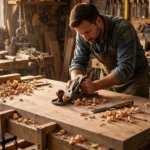
A handmade walnut table costs four times more than the big-box version, and you’re not sure the gap is worth it. Weighing handcrafted furniture value vs cost, a well-built handmade piece usually costs less per year than cheap furniture — if you keep it 10+ years. Below, you’ll get a cost-per-year chart and a quick test for real craftsmanship.
Handcrafted Furniture Value vs Cost: The Real Math
Sticker price is the wrong number to look at. The number that matters is cost per year of use.
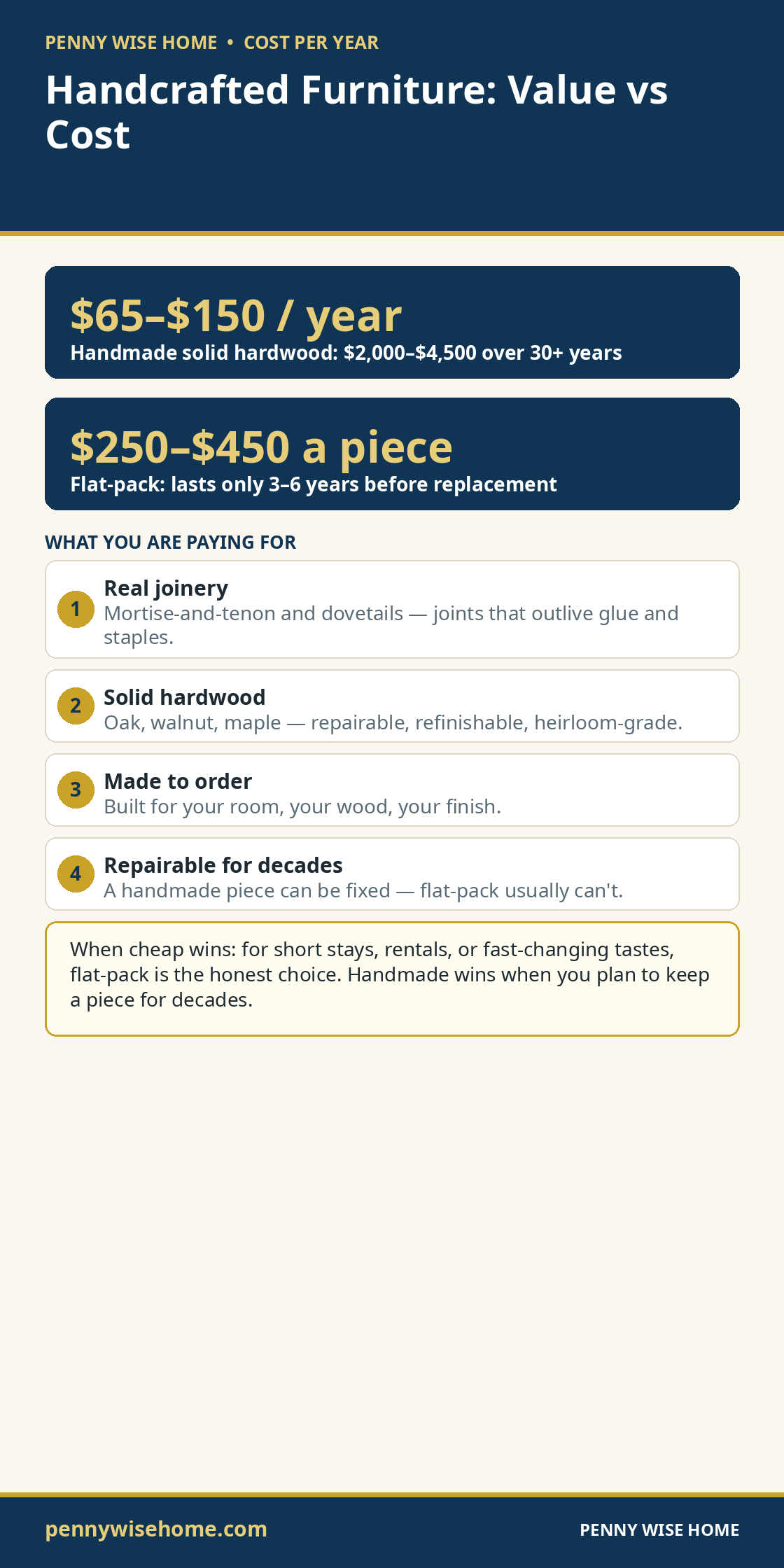
Here’s a rough example using typical U.S. price ranges. Your numbers will vary by region, wood, and maker, but the pattern holds.
| Dining table option | Typical price | Realistic lifespan | Cost per year | Resale value later |
|---|---|---|---|---|
| Particleboard/laminate (flat-pack) | $250–$450 | 3–6 years | $60–$85 | Near zero |
| Mass-produced veneer over MDF | $600–$1,200 | 6–12 years | $75–$120 | Low |
| Handcrafted solid hardwood | $2,000–$4,500 | 30+ years | $65–$150 (dropping every year you keep it) | Moderate to strong |
Key takeaway: In year five, the handmade table looks expensive. In year 25, it’s the cheapest table in the chart — and it still has resale value.
There’s a hidden cost to cheap furniture too. The EPA reports that Americans generated about 12.1 million tons of furniture and furnishings waste in 2018, and roughly 80% went to landfills. Replacing a table three times means hauling it away three times.
What You’re Really Paying For in Handcrafted Furniture
The truth is, most of the extra cost is labor and materials you can’t see in a photo. Here’s where the money goes.
- Solid hardwood. Oak, maple, cherry, and walnut cost far more per board foot than particleboard or MDF.
- Kiln-dried lumber. Good makers dry wood to roughly 6–8% moisture content so it doesn’t crack or warp in your house.
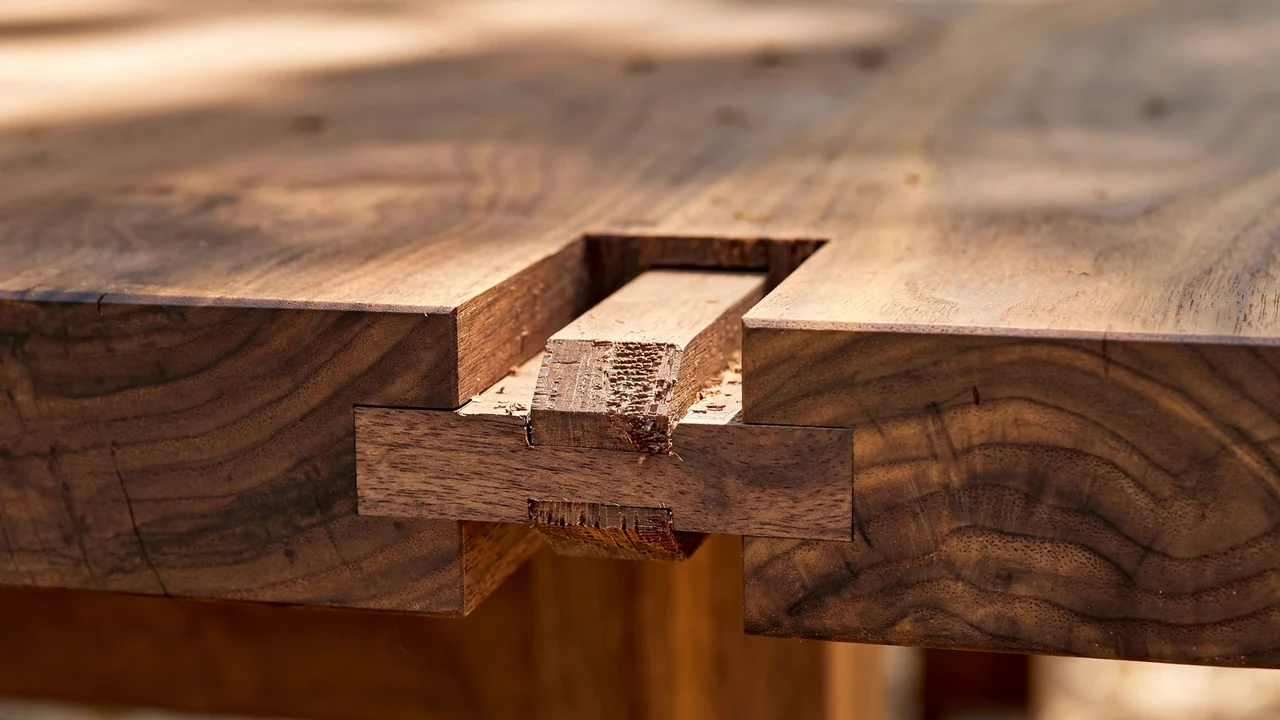
- Real joinery. Mortise-and-tenon joints and hand-fitted dovetails take hours. Staples and cam locks take seconds.
- Finish work. Multiple sanded coats of oil, lacquer, or catalyzed varnish protect the wood for decades.
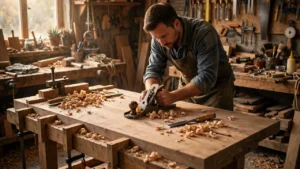
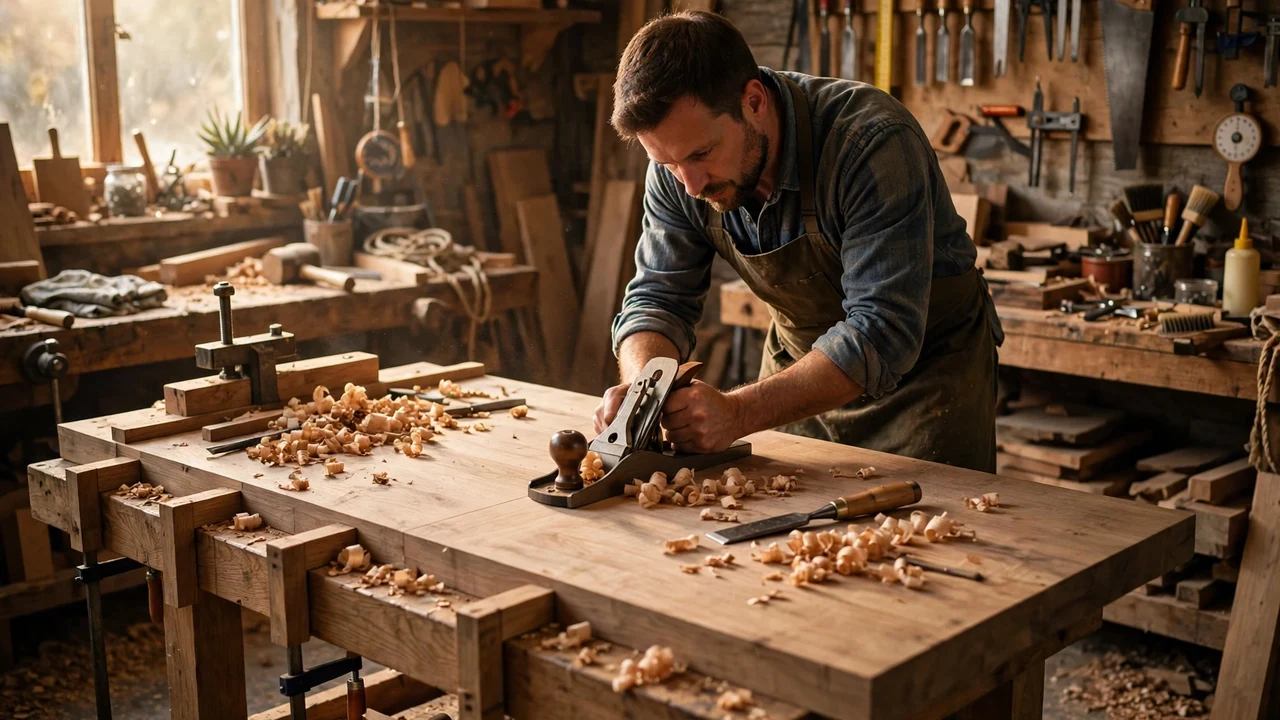
- Hours. A single dining table can take a skilled maker days of shop time.
Wood hardness matters too. On the Janka hardness scale, hard maple rates around 1,450 lbf and white oak around 1,360 lbf, while black cherry sits near 950 lbf. Harder wood shrugs off dents from dropped keys and kids’ toys.
When Handcrafted Furniture Is Worth the Cost
Handcrafted furniture value vs cost tips in your favor in these situations:
- Daily-use pieces. Dining tables, dining chairs, beds, and dressers take constant abuse. That’s where cheap joints fail first.
- You’re settled. If you’ll stay in one home or region for 5+ years, heavy solid wood stops being a moving headache.
- Timeless designs. Shaker, mission, and simple mid-century lines don’t go out of style, so resale stays strong.
- You want repairability. Solid wood can be sanded, refinished, and reglued. Particleboard can’t.
Picture this: your kid drags a toy truck across the table. On solid oak, you sand the scratch and re-oil it in 20 minutes. On laminate, the scratch is permanent.
Brutally Honest Cons of Handcrafted Furniture
Here’s the catch: handmade isn’t perfect, and nobody selling it will tell you the downsides.
- Long lead times. Custom work often takes 8–16 weeks. Some popular makers run longer.
- Serious weight. A solid oak 72-inch table can weigh 150+ pounds. Moving it up a walk-up is a two- or three-person job.
- Wood movement. Solid wood expands and shrinks with humidity. Small seasonal gaps in breadboard ends are normal, but they surprise first-time buyers.
- Limited returns. Custom pieces are almost always non-refundable once production starts.
- Quality varies by maker. “Handcrafted” isn’t a regulated term. A bad hobbyist build can be worse than a good factory piece.
Who Should Skip This: Renters who move every year, families with toddlers in a “destroy everything” phase, and anyone buying trend-driven pieces they’ll tire of in three years.
Mass-Produced Furniture: When Cheap Wins
On the flip side, factory furniture absolutely has its place. It’s the smart buy for short-term needs.
- First apartments and college housing
- Kids’ rooms you’ll redo in a few years
- Low-stress pieces like bookshelves, nightstands, and accent tables
Honest cons:
- Short life under stress. Cam-lock joints loosen each time you disassemble and move them.
- Moisture damage. Particleboard swells permanently when it gets wet — one plant overflow can ruin a shelf.
- No real repair path. Stripped screw holes and chipped laminate are hard to fix well.
Who Should Skip This: Anyone buying a dining table, bed, or dresser they plan to keep a decade or more.
If you’re furnishing on a tight budget, our guides to where to buy cheap apartment furniture and the cost to furnish a studio apartment help you decide where cheap is fine.
How to Tell Real Craftsmanship From “Hand-Finished” Marketing
That brings us to the biggest mistake people make: paying a handcrafted price for a factory piece with a hand-applied stain. Run this 5-point check in any showroom.
- Pull a drawer all the way out. Look for dovetail joints at the corners and a solid wood drawer box, not stapled fiberboard.
- Look underneath. Real makers leave clean, finished undersides and corner blocks that are glued and screwed.
- Check the end grain. Solid wood shows growth rings on the edge. Veneer shows a thin layer over a uniform core.
- Ask about wood drying. A maker who can tell you their kiln schedule or moisture target knows their craft.
- Ask who built it. Real craft shops can name the workshop or maker. Vague answers are a red flag.
Also ask about sourcing. FSC certification confirms wood came from responsibly managed forests, and many small makers use local or reclaimed lumber.
Smart Ways to Get Handcrafted Value for Less
The best part? You don’t have to pay full custom prices to get solid, handmade quality.
- Buy secondhand solid wood. Estate sales and online marketplaces are full of decades-old hardwood pieces at a fraction of new cost.
- Order “in-stock” from makers. Many workshops sell floor models or cancelled orders at a discount.
- Mix tiers. Spend on the dining table and bed. Save on side tables and shelves.
- Time it. Check our guide to the best time to buy furniture for sale seasons.
- Skip what you don’t need. Our list of things renters waste money on frees up cash for one great piece.
Care Habits That Protect Handcrafted Furniture Value
Here’s the thing: handcrafted furniture only beats cheap furniture on value if you protect it. A few habits keep that cost-per-year number dropping.
- Control humidity. Keep indoor humidity steady, roughly 35–55%. Big swings cause cracks and loose joints.
- Use felt pads and trivets. Hot pans and sliding chair legs cause most finish damage.
- Dust with a damp, soft cloth. Skip silicone sprays — they make future refinishing harder.
- Re-oil or wax on schedule. Oil finishes often need a refresh every 6–12 months on busy tables.
- Keep it out of direct sun. UV light darkens cherry and fades walnut unevenly.
Key takeaway: Ten minutes of care a month keeps a handmade piece’s resale value high for decades.
Bottom Line on Handcrafted Furniture Value vs Cost
When you compare handcrafted furniture value vs cost over a decade or more, solid handmade pieces usually win — they last longer, can be repaired, and still sell for real money later. But if you move often or need furniture fast, cheap pieces are the smarter short-term buy. Spend big on what you touch every day, and save everywhere else.
FAQs
Is handmade furniture worth the money?
Usually, yes — for daily-use pieces you’ll keep 10+ years. Cost per year often ends up lower than replacing cheap furniture several times.
How long does handcrafted furniture last?
Well-built solid hardwood furniture can last generations with basic care. Many pieces outlive their first owners.
Does solid wood furniture hold its value?
Better than most furniture. Classic solid wood designs often resell for a meaningful share of their price, while particleboard pieces rarely resell at all.
Why is handcrafted furniture so expensive?
You’re paying for hardwood, kiln drying, hand-cut joinery, multi-coat finishing, and many hours of skilled labor.
Is Amish furniture better quality?
Many Amish workshops use solid hardwood and traditional joinery, which tends to be durable. Quality still varies, so inspect drawers, joints, and finish before buying.