Every dining set online claims to be “eco-friendly,” and you can’t tell which ones mean it. The key environmental considerations for buying dining room furniture are simple: buy durable certified or reclaimed wood, confirm low emissions, and plan for a long life. Below, you’ll get a 9-point eco checklist and honest cons for every green option.
Why Environmental Considerations Matter for Dining Room Furniture
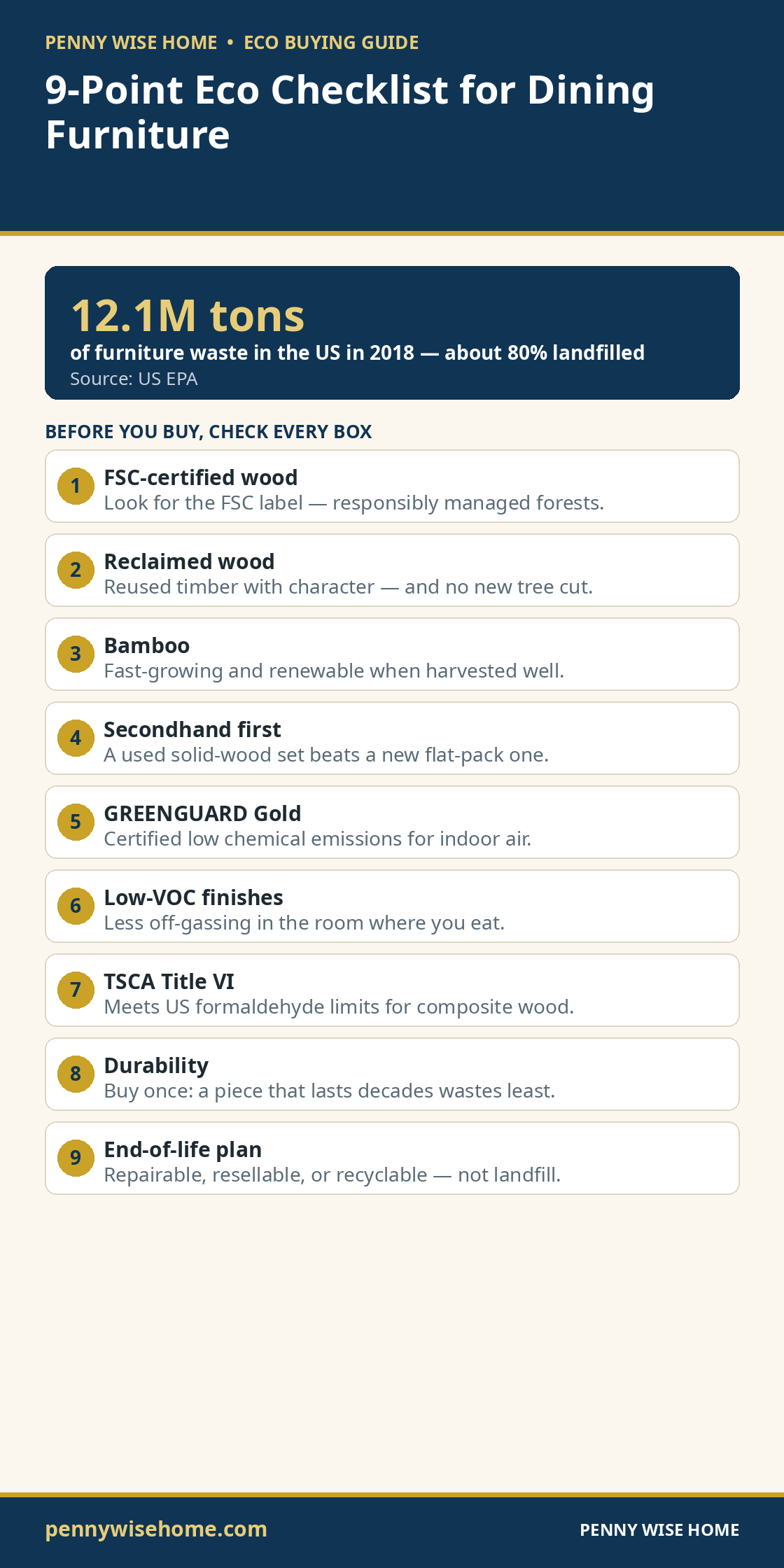
Here’s the problem nobody talks about. Americans generated about 12.1 million tons of furniture and furnishings waste in 2018, according to the EPA, and about 80% of it went to landfills. Recycling barely registered.
Dining furniture is a big part of that because tables and chairs take daily abuse. Cheap chairs wobble, joints fail, and the set gets tossed. The greenest dining set is the one you don’t have to replace.
- Forests: Where the wood came from and how it was harvested
- Indoor air: Formaldehyde and VOCs from glues and finishes
- Lifespan: How long it lasts and whether it can be repaired
- End of life: Resale, donation, or landfill
The 9-Point Eco Checklist for Dining Room Furniture
| # | Check | What to look for | Red flag |
|---|---|---|---|
| 1 | Wood source | FSC-certified, reclaimed, or local hardwood | “Sustainably sourced” with no proof |
| 2 | Formaldehyde | TSCA Title VI label on composite wood | No compliance label |
| 3 | Emissions | GREENGUARD Gold certification | Strong chemical smell out of the box |
| 4 | Finish | Water-based, hardwax oil, or low-VOC finish | Unknown solvent-based finish |
| 5 | Durability | Mortise-and-tenon or dowel joints | Cam locks on chairs |
| 6 | Repairability | Solid wood you can sand and refinish | Laminate that can’t be fixed |
| 7 | Upholstery | Removable, cleanable seat covers | Fabric treated with unknown stain repellents |
| 8 | Shipping | Made regionally or ships efficiently | Oversized freight crossing oceans |
| 9 | End of life | Strong resale value or take-back program | Disposable build |
Key takeaway: Durability and repairability carry as much environmental weight as certifications.
Wood Sourcing: The First Environmental Consideration
Look for FSC certification, which tracks wood from responsibly managed forests through the supply chain. It’s the most widely recognized forestry label on U.S. furniture.
The U.S. also has legal guardrails. The Lacey Act bans imports of illegally harvested plant products, and since December 2024, many imported furniture items need a declaration listing wood species and harvest country.
The truth is, vague claims mean little. The FTC’s Green Guides warn marketers against broad claims like “eco-friendly” without specific proof. Ask: “Which certification, and for which parts?”
Indoor Air: Formaldehyde and VOCs
Your dining table sits where you eat. Air quality matters.
Composite wood — plywood, particleboard, and MDF — must meet EPA TSCA Title VI formaldehyde limits: 0.05 ppm for hardwood plywood, 0.09 ppm for particleboard, and 0.11 ppm for MDF. Compliant products carry a label.
Finishes add volatile organic compounds (VOCs), which can be higher indoors than outdoors. For lower emissions, look for GREENGUARD Gold or ask about water-based finishes.
Picture this: you unbox new chairs and the dining room smells like a hardware store for a week. That smell is off-gassing. Open windows and let new pieces air out before daily use.
Comparing Eco-Friendly Dining Furniture Options
Now, you might be wondering which material is “greenest.” Each has trade-offs.
FSC-Certified Solid Wood
- Con: Costs more than uncertified wood or composite.
- Con: Certification may cover only some parts of a piece — read the fine print.
Who Should Skip This: Buyers who need a table fast and cheap for a short stay.
Reclaimed Wood
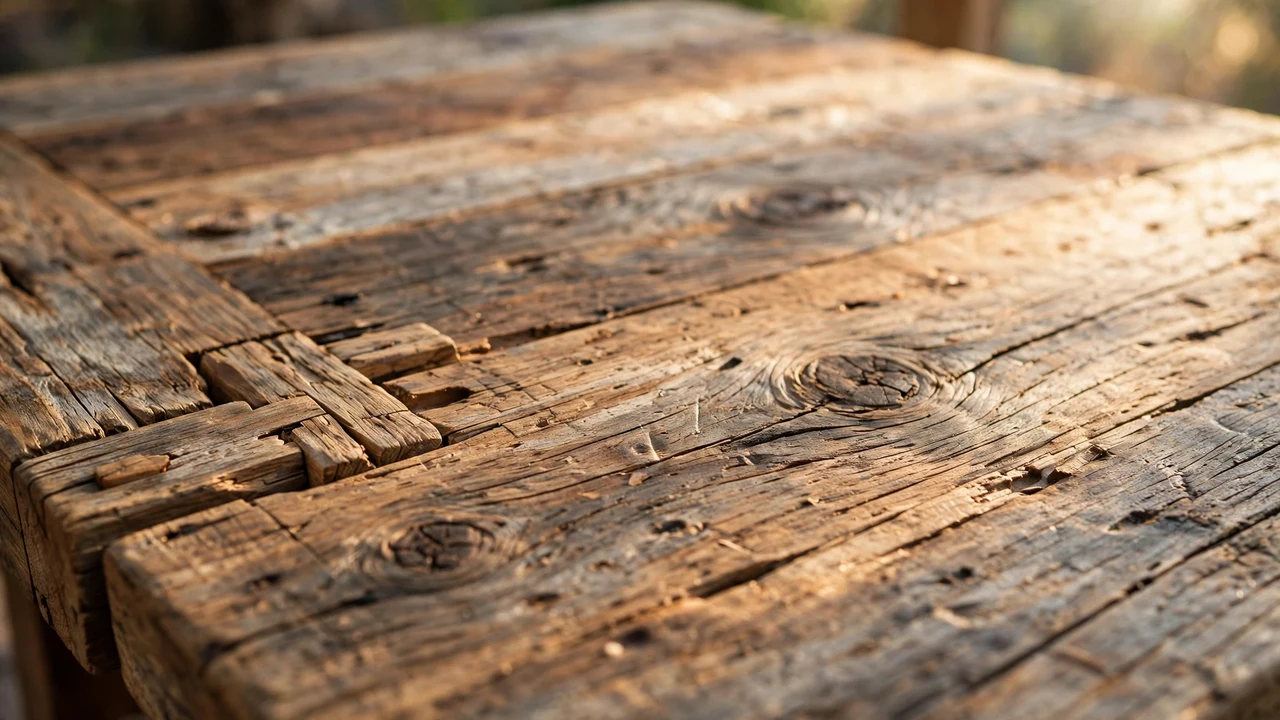
- Con: Old painted wood can contain lead. The EPA warns that paint from before 1978 may contain lead — ask whether surfaces were stripped and sealed.
- Con: Nail holes, cracks, and uneven surfaces can trap crumbs and make cleaning harder.
- Con: Often pricey because of labor to clean and mill it.
Who Should Skip This: Families with babies who chew on table edges, unless you confirm a lead-safe finish.
Bamboo
- Con: Bamboo panels rely on adhesives, so check emissions labels.
- Con: Most bamboo is shipped long distances.
Who Should Skip This: Anyone who wants a refinishable heirloom piece.
Secondhand Solid Wood
- Con: Older chairs may have loose joints that need regluing.
- Con: You’ll need to pick up and haul it yourself.
Who Should Skip This: People who don’t want any DIY. Otherwise, this is the greenest and cheapest option on the list.
Dining Chairs: The Weak Link
That brings us to the biggest mistake people make: buying a sturdy table with flimsy chairs. Chairs take far more stress than tables. People lean back, scoot, and tip them on two legs.
- Pick chairs with stretchers between the legs.
- Choose removable seat cushions you can wash or recover.
- Be cautious with “stain-proof” fabric treatments. Some use PFAS chemicals, which the EPA is working to limit. Ask what the treatment is.
Questions to Ask Before You Buy
Now, you might be wondering how to test a seller’s green claims. Ask these questions — good sellers answer them quickly.
- Which parts are solid wood, and which are composite?
- Is the wood FSC-certified or reclaimed? Can you show the certificate?
- Does the composite wood carry a TSCA Title VI label?
- What finish is used — water-based, oil, or solvent-based lacquer?
- Are replacement parts or repair services available?
- Do you offer a buy-back or resale program?
Key takeaway: Vague answers are an answer. Walk away from sellers who can’t explain what’s in their furniture.
Plan for the End of Life Now
On the flip side, even the best table eventually leaves your home. Plan ahead.
- Buy classic shapes. They resell faster.
- Keep the paperwork. Brand and material details help resale.
- Donate or resell. Online marketplaces and local charities often take solid wood sets.
- Ask about take-back programs. Some brands buy back or resell their own pieces.
How to Buy Eco-Friendly Dining Furniture on a Budget
The best part? The most eco-friendly option is often the cheapest.
- Shop secondhand first — see our guide on where to buy cheap apartment furniture.
- Buy new pieces during sales using our best time to buy furniture calendar.
- Budget realistically with our cost to furnish a studio apartment breakdown.
- Style an older set with our affordable decor that looks expensive tips.
Bottom Line on Environmental Considerations for Buying Dining Room Furniture
The most important environmental considerations for buying dining room furniture are durable, responsibly sourced wood, low chemical emissions, and a long life. Check for FSC, TSCA Title VI, and GREENGUARD labels, but don’t let a label replace solid construction. Buy once, buy well, or buy used.
FAQs
What is the most sustainable material for a dining table?
Secondhand solid wood is hard to beat. For new tables, FSC-certified or reclaimed hardwood are strong choices.
Is solid wood furniture eco-friendly?
It can be, especially when certified or reclaimed. Its long life and repairability keep it out of landfills.
Do dining tables off-gas?
New pieces with composite wood or fresh finishes can release formaldehyde and VOCs. Airing them out and choosing certified low-emission products helps.
What does FSC certified mean?
It means the wood was tracked from forests managed to Forest Stewardship Council standards.
Is reclaimed wood safe for a dining table?
Usually, if it’s cleaned, stripped of old paint, and sealed properly. Ask about lead testing for painted wood.